
Ethnobotanical Assessment of Medicinal Plants for Snakebite Management in Kebbi State, Nigeria
-
Ibrahim Sani


Department of Biochemistry, Faculty of Life Sciences, Abdullahi Fodio University of Science and Technology, Aliero, Kebbi State, Nigeria
Angela Nnenna Ukwuani-KwajaDepartment of Biochemistry, Faculty of Life Sciences, Abdullahi Fodio University of Science and Technology, Aliero, Kebbi State, Nigeria
Abdulhamid ZubairuDepartment of Biochemistry, Faculty of Life Sciences, Abdullahi Fodio University of Science and Technology, Aliero, Kebbi State, Nigeria
Fatima BelloDepartment of Biochemistry, Faculty of Life Sciences, Abdullahi Fodio University of Science and Technology, Aliero, Kebbi State, Nigeria
| Received 15 Jan, 2026 |
Accepted 10 Jun, 2026 |
Published 30 Jun, 2026 |
Background and Objective: Snakebite envenoming causes essential mortality and morbidity and is among the leading health problems in Nigeria, especially in rural areas. Aim: This research work was aimed at conducting an ethnobotanical survey of medicinal plants used for the management of snakebite in Kebbi State, Nigeria. Materials and Methods: The study was conducted within Kebbi State, Nigeria. Respondents with knowledge of medicinal plants for snakebites were accessed via informants and acquaintance. Data were also retrieved from hunters, herbalist and snake charmers. Demographic characteristics, personal information of respondents, information on plants used, mode of preparation and administration were also collected via oral interview. Results: Twenty six individuals all male consented to disclose information and knowledge regarding plants and formulations used in the treatment or management of snakebite injuries within Kebbi State, all the respondents were male (100%), with 3.85% under 30 years, 38.46% aged 31-50, and 57.69% over 50 years. Respondent practicing both herbalism and snake charming were (19.23%), while respondents practicing only snake charming (57.69%) and hunters only (23.08%). Information on the occupation of respondents who agreed to disclose information about antisnake-venom medicinal plants was also recorded. Twenty seven medicinal plants from 12 different families were document in this study.The plants mode of preparation, administration and part used which are majorly roots, are disclosed by respondents within Kebbi State for the treatment of snakebite envenoming. The fidelity level of plants ranges between 22.22-88.88, and high informants consensus factor (ICF) between (0.85-1) for all the disease categories. Conclusion: The present study documented twenty seven medicinal plants used by herbalist, snake-charmers and hunters for snakebites treatment in Kebbi State, the cited plant also revealed high informant consensus factor and Fidelity level.
| Copyright © 2026 Sani et al. This is an open-access article distributed under the Creative Commons Attribution License, which permits unrestricted use, distribution, and reproduction in any medium, provided the original work is properly cited. |
INTRODUCTION
Snakebite envenoming causes morbidity and mortality and is among the leading health issues in Nigeria, especially in rural areas1. It was estimated that around 435,000 to 580,000 snakebites incidences occur in Africa annually with an urgent need for treatment2. According to Odin et al.3, over 497/100,000 incidences of snakebite occur annually with over 12.2% estimated death in Savannah Region of Northern Nigeria. Envenoming often occurs in rural communities, low- and middle-income countries with more prevalence in women, children and farmers. Countries with poor health system and limited medical resources have the highest burden of snakebite envenomation4. Snakebite envenoming leads to complications like local tissue damage, necrosis, hemorrhage, cytotoxicity, nephrotoxicity which are not tackled by conventional antivenins. Hence, it’s essential to search for medicinal plants with antivenom properties5.
Although no available plant-derived antivenom in Nigerian markets presently, it is a usual phenomenon to witness snake charmers regularly playing with different types of dangerous snakes in gatherings and during festivities6. These snake charmers claim to have effective cure of snakebites envenomation using plant remedies. Therefore these claims gives positive expectation for high possibilities of documenting effective and wider-spectrum plant antivenom for the management of common poisonous snakes found in the Northern parts of Nigeria7.
Medicinal plants have played vital role as alternative to modern medicine mainly due to their affordability, accessibility and acceptability as well as efficacies in managing several illnesses such as microbes related, cancer, and hyperglycemia and snake envenoming and several others8. Indeed, recent ethno-botanical data have pinpoint numerous plants used for treating diseases in several regions of Nigeria9.
Kebbi State is located in Northwestern Nigeria, with an ancient history bestowed with abundant medicinal plants10. It has over three million eight hundred people across four emirates comprising of Argungu Gwandu, Yauri and Zuru11. Since ancient time these emirates are violent free and there is peaceful co-existence between them. Majority of these people especially rural dwellers depend on folklore medicines for acute and chronic diseases and have been evidently effective for long period of time12.
This research was designed to identify plants and herbal formulations used to treat snakebite envenoming by herbalist in Kebbi State. Furthermore, the expectation from this study is to reveal limited documented plants that could serve as potential sources of novel venom neutralizing agent from natural sources.
MATERIALS AND METHODS
Study area: The ethno-botanical study was conducted within the four emirates of Kebbi State consisting of Argungu, Zuru, Yauri, and Gwandu Emirates (Fig. 1). The emirates consist mainly of the Hausa-Fulani tribe (Argungu and Gwandu Emirates), Gungawa (Yauri Emirates) and Dakarkari (Zuru Emirates). The majority of the people are farmers, traders and practice the Islamic religion. The location (latitude and longitude) of Kebbi State, Nigeria, is 12.4376°N, 4.2078°E. It shares common borders with Niger State to the Southwest and to the East is Sokoto State. The North West is by Niger Republic13.
The landscape is predominantly flat with slight undulations, featuring compact, stony brown soil. In Kebbi State, the vegetation is classified as Savannah. There are two primary seasons: The dry season, which extends from November to April, and the rainy season, occurring from May to October. The harmattan period spans from November to January, marked by significant fog, dust, and cooler temperatures. Notably, March and April are the warmest months, with minimum temperatures ranging from 38 to 42°C in November. During the harmattan months (December to February), temperatures decrease, averaging between 20 and 23°C, with humidity levels fluctuating between 17% and 80%14.
Survey sampling technique: A convenience sampling technique and a strategized method which involved disclosing previous cited plants to subsequent respondent and observed their judgments was adopted in this study15. Ethical approval was obtained from the local authorities and was conducted according to International Society for Ethnobiology’s code of ethics. The importance of the study was disclosed to the respondents and only respondents who agreed to give their consent voluntarily were interviewed. The survey was conducted in Kebbi State, Nigeria and was structured within four emirates kingdoms comprising of Gwandu, Zuru, Argungu, and Yauri Emirates.
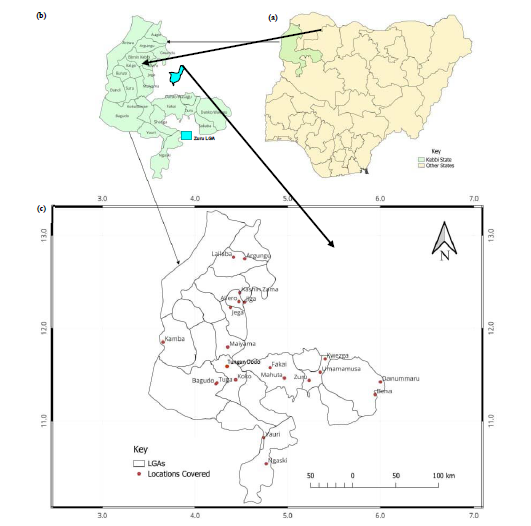
|
Data collection: The participants employed for this study were approached with the help of informants and acquaintances. Demographic data and a survey on suitable plants were identified through herbalists, snake charmers, and hunters in Kebbi State, Nigeria. The data collection process spanned a duration of eight months (February 2023-September 2023). Consenting herbal medicine and snake-charming practitioners, and hunters were orally interviewed after obtaining consent. Information on the plant’s local name, parts of the plant used, procedure of preparation, dosage, and mode of administration was documented. Analysis of the collected data was done according to the protocol previously described by Malami et al.16. Online literature via PubMed, Google Scholar and Scopus was consulted for anti-venom activities of the cited plants with the view of obtaining reports on their anti-snake venom activities.
Plant collection and identification: All the plants documented from the ethno-botanical survey were collected and identified by a taxonomist. Afterwards, voucher numbers were assigned and placed in the herbarium of Abdullahi Fodio University of Science and Technology, Aliero, and Federal University Birnin Kebbi, Kebbi State, Nigeria. The identification of the plant names was verified using the World Flora Online.
Criteria for selection
Inclusion criteria: Only areas or locations with prior information of the presence of herbalist snake-charmers and hunters were visited. The plants selected for antivenom screening were selected based on limited validity, frequency of citation, and low toxicity profile.
Exclusion criteria: Places or locations with records of insecurity were excluded. Herbalists, snake-charmers, and hunters who were not willing to participate were also excluded.
Data analysis: Data collected on the medicinal plants and plant formulations used in treating snakebite envenoming, information on demography were tabulated, categorized and analysed using descriptive statistics via Microsoft word. The frequency of citation (%) was calculated as previously described by Segun et al.17 (a) While fidelity level (FL) was calculated as described by Ugulu18 and (b) Similarly, informant consensus factor (ICF) was as described by Trotter and Logan19.
| (1) |
| (2) |
| (3) |
where, Nur number of use-reports in each disease category, Nt number of species used for that use category. ICF values range between 0 and 1, where 1 indicates the highest level of respondents’ consensus on the species to be used in the treatment within a category of illness.
RESULTS AND DISCUSSION
Demographic data of respondents: Twenty six individuals agreed to disclose information and knowledge regarding plants and formulations used in treating or managing snakebites within Kebbi State. All the respondents were males (100%) among whom one person was less than thirty years of age (3.85%), while ten respondents were between the age of 31-50 years (38.46%). The majority, fifteen respondents were above fifty years (57.69%) (Table 1).
| Table 1: | Demographic data of respondents | |||
| Biodata | Frequency | Percentage (%) |
| Gender | ||
| Male | 26 | 100 |
| Female | 0 | 0 |
| Total | 26 | 100 |
| Age distribution (Years) | ||
| ≤30 | 1 | 3.85 |
| 31-50 | 10 | 38.46 |
| ≥51 | 15 | 57.69 |
Occupational status of respondents: The occupational data of the respondents who agreed to disclose information on anti-venom medicinal plants is as follows: A total of five respondents practice both herbalism and snake charming (19.23), while fifteen respondents practice only snake charming (57.69), and six respondents were hunters (23.08%).
Medicinal plants used for the treatment of snakebite injuries in Kebbi State: Twenty seven plants which include Mitragyna inermis (Wild.) Kuntze, Mimosa pudica L, Hyphaene thebaica (Del.) Mart, Borassus aethiopum Mart., Annona senegalensis Pers., Combretum geitonophyllum (Hutch. and Dalziel)., Combretum lamprocarpum Diels., Thaumatococcus daniellii (Benn.) Benth. ex Eichler, Sclerocarya birrea (A.Rich.) Hochst, Parkia biglobosa (Jacq.) R.Br. ex G.Don, Crinum ornatum (Aiton) Herb., Pleurotus tuber-regium (Fr.) Singer, Cuscuta campestris Yunck., Sterculia setigera Delile, Galinsoga parviflora Cav., anne microcarpa Engl. and K. Krause, Strychnos spinosa Lam., Diospyros mespiliformis Hochst. ex A.DC., Faidherbia albida (Delile) A.Chev, Terminalia avicenoides Guill. and Perr., Bauhinia rufescens Lam., Newbouldia laevis (P.Beauv.) Seem. ex Bureau, Indigofera astragalina DC., Ficus platyphylla Delile, Azadirachta indica A. Juss, Catunaregam nilotica (Stapf) Tirveng and Blighia sapida K.D.Koenig were disclosed by the respondents within Kebbi State for the treatment of snakebite envenoming. The voucher specimen, number of citation, part of plant used, Local Government were the plant was cited, the ethnic group of respondents, citation frequency and ranking are presented in Table 2.
The mode of preparation of the cited plants, mode of administration, part used and reports of published research on anti-snake venom are presented in Table 3. All the plant parts mentioned are majorly roots, followed by leaves and then stem-barks.
The fidelity level of plants used for treating snakebite envenoming in Kebbi State, Nigeria is presented in (Table 4). Annona senegalensis Pers., Thaumatococcus daniellii (Benn.) Benth. ex Eichler, Crinum ornatum (Aiton) Herb., and Galinsoga parviflora Cav. Has the highest fidelity level of 88.88, 77.77, 77.77 and 75 respectively. Apart from there usage in managing snakebite envenoming these plants also have other medicinal applications which include; diabetes and hypertension, wounds, sores and vomiting as well as skin diseases management.
Table 5 presents the informants consensus factor (ICF) of medicinal plants used for the treatment of snakebite envenoming in Kebbi State, Nigeria. The result shows high informants consensus factor (ICF) (0.85-1) for all the disease categories outlined in this study including neglected tropical parasitic diseases, blood and cardiovascular disorders. brain disorders, gastro-intestinal tract (GIT) disorders, general health conditions (GHC), skeletomuscular disorders, skin and hair disease, throat and respiratory diseases, poison infection due to stings/bites, metabolic disorders and urogenital disorders implying strong consensus between respondents who mentioned specific plant species used in the treatment of those ailments.
Globally, there are prominent herbal practices for curing snakebite envenoming by traditionalist. The effective use of plants in folklore for treating snakebites is primarily due to their low toxicity profile, cultural preferences, effectiveness, and affordability34. Many people of Kebbi State are mostly farmers and hunters with quality knowledge and a history of folkloric medicine35.
In the present study, analysis disclosed that over thirty-eight percent (38%) of the respondents were between 31-50 years of age, while the majority of the respondent, fifty-seven percent (57%) were above 50 years. Also, the source of knowledge of anti-snake medicinal plants is majorly inherited. The present findings is in-line with the report of Maga et al.36 who also found that, the traditional healers in Kebbi State are majorly aged between 50years and above and the mode by which they obtain the knowledge is mostly inheritance.
| Table 2: | Medicinal plants used for the treatment of snakebite envenoming in Kebbi State, Nigeria | |||
| S/N | Local names (Hausa) | Common names | Botanical names | Family | NC | PU | VN | EG | LG | RFC | R |
| 1 | Giyya | Mitragyna inermis(Wild.) Kuntze | Rubiaceae | 6 | R | Ksusta/psb/h/ voucher no:s.n |
H | G | 23.08 | 8 | |
| 2 | Kama walkin ka | Touch-me-not | Mimosa pudica L | Fabaceae | 11 | WP | Ksusta/psb/h/ voucher no:s.n |
H | G | 42.31 | 4 |
| 3 | Kaba/goruba | Doum palm | Hyphaene thebaica (Del.) Mart | Arecaceae | 4 | L | Ksusta/psb/h/ voucher no:s.n |
H/D | G/Z | 15.38 | 10 |
| 4 | Giginya | African fan palm | Borassus aethiopum Mart. | Arecaceae | 6 | R | Ksusta/psb/h/ voucher no:s.n |
H/D | G/Z | 23.08 | 8 |
| 5 | Gwandar daji | Wild custard apple | Annona senegalensis Pers. | Annonaceae | 16 | R | Ksusta/psb/ h/504A |
H/G/D | A/G/Y/Z | 61.54 | 1 |
| 6 | Farar tarabniya | Banyun kignat bagid white |
Combretum geitonophyllum (Hutch. and Dalziel). |
Combretaceae | 6 | R | Ksusta/psb/ h/311A |
D | Z | 23.08 | 8 |
| 7 | Jar tarbniya | Banyun kignat bagid red |
Combretum lamprocarpum Diels. |
Combretaceae | 4 | R | FUBK/H/155 | D | Z | 15.38 | 10 |
| 8 | Dan dawon mashaya | Miracle Berry | Thaumatococcus daniellii (Benn.) Benth. ex Eichler |
Marantaceae | 7 | R | Ksusta/psb/h/ voucher no:s.n |
D/H | Z/G | 26.92 | 7 |
| 9 | Doruwa | African locust bean | Parkia biglobosa (Jacq.) R.Br. ex G.Don |
Leguminosae | 5 | SB | Ksusta/psb/h/281 | D/H/G | A/G/Y/Z | 19.23 | 9 |
| 10 | Loda | Marula | Sclerocarya birrea (A.Rich.) Hochst |
Anacardiaceae | 8 | L/R | Ksusta/psb/h/114A | H/D | A/G/Z | 30.77 | 6 |
| 11 | Albasan-Kura | Crimum | Crinum ornatum (Aiton) Herb. |
Amaryllidaceae | 7 | B | Ksusta/psb/h/ voucher no:s.n |
D/H | G/Z | 26.92 | 7 |
| 12 | Katala | Pleurotus tuber-regium (Fr.) Singer |
Pleurotaceae | 9 | R | Ksusta/psb/h/ voucher no:s.n |
D | Z | 34.62 | 5 | |
| 13 | A’a kayi ka fita | Dodder | Cuscuta campestris Yunck. | Convolvulaceae | 6 | WP | Ksusta/psb/h/ voucher no:s.n |
D/H/G | A/G/Y/Z | 23.08 | 8 |
| 14 | Kukkuki | Karaya gum Tree | Sterculia setigera Delile | Malvaceae | 15 | SB | Ksusta/psb/h/83B | D/H/G | A/G/Y/Z | 57.69 | 2 |
| 15 | Gwafta | gallant soldier | Galinsoga parviflora Cav. Ta | Asteraceae | 6 | SB | Ksusta/psb/h/ voucher no:s.n |
D/H/G | G/Y/Z | 23.08 | 8 |
| 16 | Farun kura | African grape | Strychnos spinosa Lam. | Loganiaceae | 3 | L/SB | Ksusta/PSB/H/ Voucher No: S.N |
D | Z | 11.54 | 11 |
| 17 | Kokiya | Natal orange | Diospyros mespiliformis Hochst. ex A.DC. |
Ebenaceae | 3 | SB | Ksusta/PSB/H/ Voucher No: S.N |
D/G | Z/Y | 11.54 | 11 |
| 18 | Kaiwa / Kanya | Jackalberry | Faidherbia albida (Delile) A.Chev. | Fabaceae | 12 | SB | Ksusta/PSB/H/182 | D/H/G | A/G/Y/Z | 46.15 | 3 |
| 19 | Gawo | Winter thorn | Terminalia avicennioides Guill. & Perr. |
Combretaceae | 11 | R | Ksusta/PSB/H/319 | D/H/G | A/G/Z | 42.31 | 4 |
| 20 | Bawa / Baushe | Bambara tree | Bauhinia rufescens Lam. | Fabaceae | 4 | R/L | Ksusta/PSB/H/ Voucher No: S.N |
D/G | Z/Y | 15.38 | 10 |
| 21 | Jirga | Silver butterfly tree | Newbouldia laevis (P. Beauv.) Seem. ex Bureau |
Bignoniaceae | 9 | R | Ksusta/PSB/H/253 | D/H/G | A/G/Y/Z | 34.61 | 5 |
| 22 | Aduruku | Boundary tree | Strychnos spinosa Lam. | Loganiaceae | 3 | L | Ksusta/PSB/H/ Voucher No: S.N |
D/G | Z/Y | 11.54 | 11 |
| 23 | Masahi | Silky indigo | Indigofera astragalina DC. | Fabaceae | 4 | WP | Ksusta/PSB/H/SN | D/G | Z/Y | 15.38 | 10 |
| 24 | Gamji | Broad-leaf fig | Ficus platyphylla Delile | Moraceae | 5 | SB | Ksusta/PSB/H/2691 | H/D/G | G/Z/Y | 19.23 | 9 |
| 25 | Dogon yaro | Neem tree | Azadirachta indica A. Juss | Meliaceae | 11 | L | Ksusta/PSB/H/61 | D/H/G | A/G/Y/Z | 42.31 | 4 |
| 26 | Tsibra | Catunaregam | Catunaregam nilotica (Stapf) Tirveng. |
Rubiaceae | 4 | R | Ksusta/PSB/H/SN | D/G | Z/Y | 15.38 | 10 |
| 27 | Gwanja kusa | Akee apple | Blighia sapida K.D. Koenig | Sapindaceae | 3 | R | Ksusta/PSB/H/ Voucher No: S.N |
D | Z | 11.54 | 11 |
| Local name: Hausa language, VN: Voucher number, LG: Local government (A: Argungu, G: Gwandu, Y: Yauri and Z: Zuru), EG: Ethnic group (H: Hausa, G: Gungawa and D: Dakarkari), PU: Parts Used (R: root, SB: Stembark, L: Leaves, HP: Whole plant, B-Bud), NC: Number of citation, FC: Frequency of citation and R: Ranking | |||||||||||
| Table 3: | Herbal formulations and preparation used for treating snakebite envenoming in Kebbi State, Nigeria | |||
| S/N | Botanical names | Part of the plant used | Mode of preparation | Mode of administration | RPRAV |
| 1 | Mitragyna inermis (Wild.) Kuntze |
Root | Boiled in water and drink the juice |
A cup Orally administered three times daily |
No report |
| 2 | Mimosa pudica L. | Whole plant |
Grand into powder and mixed either with milk or pap |
Orally administered once | Meenatchisundaram and Michael20, and Sia et al.21 |
| 3 | Hyphaene thebaica (Del.) Mart | Leaf | Grand into powder and mixed either with milk or pap |
Orally administered once | No report |
| 4 | Borassus aethiopum Mart. | Root | Grand into powder and mixed either with milk or pap |
Orally administered once daily, until fully recovered |
Sarkiyayi et al.22 |
| 5 | Annona senegalensis Pers. | Root | Ground into powder and mixed with water |
Orally administered once daily until recovery. |
Emmanuel et al.23 |
| 6 | Combretum geitonophyllum (Hutch. and Dalziel). |
Root | Ground into powder and mixed either with milk or pap |
Orally administered once | No report |
| 7 | Combretum lamprocarpum Diels. | Root | Ground into powder and mixed either with milk or pap |
Orally administered once | No report |
| 8 | Thaumatococcus daniellii (Benn.) Benth. ex Eichler |
Root | Ground into powder and | Orally administered once daily until recovery |
No report |
| 9 | Parkia biglobosa (Jacq.) R.Br. ex G.Don |
Stem bark | Boiled in hot water | Drink the juice frequently until recovered |
Asuzu and Harvey24 and Hassan et al.25 |
| 10 | Sclerocarya birrea (A.Rich.) Hochst |
Leaf, Root | Squeeze and extract the juice | Drink half a cup daily until recovered |
No report |
| 11 | Crinum ornatum (Aiton) Herb. | Bud | Extract the bud | Drink the juice once daily until fully recovered |
No report |
| 12 | Pleurotus tuber-regium (Fr.) Singer | Root | boiled the root with potash | And drink the juice 2 cups daily until fully recovered |
No report |
| 13 | Cuscuta campestris Yunck. | Whole plant | Extract the whole plant | Filter and drink the Juice | No report |
| 14 | Sterculia setigera Delile | Stem bark | Powdered stem bark mixed with milk | Administered orally | Liaqat et al.26 and Sani et al.27 |
| 15 | Galinsoga parviflora Cav. Tab | Stem bark | Powdered stem bark mixed in milk | Administered orally | No report |
| 16 | Lannea microcarpa Engl. and K. Krause | Leaf/stembark | Soaked in water and drink the juice | Administered orally | No report |
| 17 | Strychnos spinosa Lam. | Stem bark | Powdered stem bark soaked in hot water | Administered orally | No report |
| 18 | Diospyros mespiliformis Hochst. ex A.DC. | Stem bark | Powdered stem bark soaked in hot water | Administered orally | Sani et al.28 |
| 19 | Faidherbia albida (Delile) A.Chev | Root | Powdered root soaked in hot water | Administered orally | No report |
| 20 | Terminalia avicenoides Guill. and Perr. | Root/leaves | Powdered | Apply to the wound area | Zanna et al.29 |
| 21 | Bauhinia rufescens Lam. | Root | Powdered root soaked in hot water | Administered orally | Sani et al.30 |
| 22 | Newbouldia laevis (P. Beauv.) Seem. ex Bureau |
Leaves | Powdered leaves soaked in hot water | Administered orally | Gbolade et al.31 |
| 23 | Indigofera astragalina DC. | Whole plant | Boiled in water (decoction) | Administered orally | No report |
| 24 | Ficus platyphylla Delile | Stem bark | Powdered and mixed with water, pap, or milk |
Administered orally | No report |
| 25 | Azadirachta indica A. Juss | Leaves | Leaves squeezed or pounded to extract juice |
Juice administered orally and applied to wound area |
Mukherjee et al.32 |
| 26 | Catunaregam nilotica (Stapf) Tirveng. | Root | Powdered root mixed with pap | Administered orally | Salihu et al.33 |
| 27 | Blighia sapida K.D. Koenig | Root | Boiled in water; prepared as decoction | Administered orally | No report |
| RPRAV: Reports of Published Research on anti-snake venom | |||||
| Table 4: | Fidelity level of the cited plants | |||
| Plant species | Others medicinal uses | NP | N | FL (%) |
| Mitragyna inermis (Wild.) Kuntze | Diarrhea, dysentery, cholera and malaria | 6 | 11 | 54.54 |
| Mimosa pudica L. | Urogenital disorders, Piles, Dysentery | 11 | 18 | 61.11 |
| Hyphaene thebaica (Del.) Mart | Hypertension | 4 | 7 | 57.14 |
| Borassus aethiopum Mart. | Bronchitis, Sore throats and Asthma | 6 | 12 | 50 |
| Annona senegalensis Pers. | Skin diseases. | 16 | 18 | 88.88 |
| Combretum geitonophyllum (Hutch. and Dalziel). | Analgesic and diuretic | 6 | 15 | 40 |
| Combretum lamprocarpum Diels. | Urinary tract infections | 4 | 13 | 30.77 |
| Thaumatococcus daniellii (Benn.) Benth. ex Eichler | Stomach ache and diarrhea | 7 | 9 | 77.77 |
| Parkia biglobosa (Jacq.) R.Br. ex G.Don | Hypertension | 5 | 18 | 27.77 |
| Sclerocarya birrea (A.Rich.) Hochst | Diarrhea and antidiabetic | 8 | 16 | 50 |
| Crinum ornatum (Aiton) Herb. | Wounds, sores and vomiting | 7 | 9 | 77.77 |
| Pleurotus tuber-regium (Fr.) Singer | Headache and stomach pain | 9 | 13 | 69.23 |
| Cuscuta campestris Yunck. | Strengthen sexual power | 6 | 11 | 54.54 |
| Sterculia setigera Delile | Diarrhea and epilepsy, anemia | 15 | 23 | 65.22 |
| Galinsoga parviflora Cav. | Malaria, and flu | 6 | 8 | 75 |
| Lannea microcarpa Engl. and K. Krause | Hypertension | 3 | 7 | 42.86 |
| Strychnos spinosa Lam. | Hypertension and diabetes | 3 | 8 | 37.5 |
| Diospyros mespiliformis Hochst. ex A.DC. | Malaria and headaches | 12 | 17 | 70.59 |
| Faidherbia albida (Delile) A.Chev | Diarrhea | 11 | 23 | 47.82 |
| Terminalia avicennoides Guill. and Perr. | Inflammation | 4 | 18 | 22.22 |
| Bauhinia rufescens Lam. | Gout and diarrhea | 9 | 15 | 60 |
| Newbouldia laevis (P.Beauv.) Seem. ex Bureau | Convulsion and epilepsy | 3 | 8 | 37.5 |
| Indigofera astragalina DC. | Wounds and digestive disorders | 4 | 7 | 57.14 |
| Ficus platyphylla Delile | Epilepsy | 5 | 19 | 26.32 |
| Azadirachta indica A. Juss | Leprosy and malaria | 11 | 22 | 50 |
| Catunaregam nilotica (Stapf) Tirveng | Inflammation and Leprosy | 4 | 10 | 40 |
| Blighia sapida K.D.Koenig | Diabetes and hypertension | 3 | 7 | 42.85 |
| NP= no of informant that claimed use of particular species for a particular diseases, N= total no of informant citing the species for any disease | ||||
| Table 5: | Informants consensus factor (ICF) of medicinal plants used for the treatment of snakebite envenoming in Kebbi State, Nigeria | |||
| Disease categories | Some recorded ailments | No. of Species (Nt) | No. of Use-Report (Nut) | ICF |
| Neglected tropical parasitic diseases | Human African Trypanosomiasis, Malaria, Onchocerciasis | 4 | 25 | 0.88 |
| Blood and cardiovascular disorders | Anemia Bleeding, Heart burns, Stroke, High Blood Pressure | 5 | 30 | 0.86 |
| Brain disorders | Migraine, Psychotic disorders, Epilepsy, Convulsions etc | 3 | 23 | 0.91 |
| Gastro-intestinal tract (GIT) disorders | Diarrhoea, Liver Infections, Pancreas Problems, Dysentery, Dyspepsia, Gallbladder, Stomach Pains, Typhoid, Oedema, Cholera, Ulcer etc |
6 | 61 | 0.92 |
| General health conditions (GHC) | Headache, Pains, Sun Burns, Allergies, Fevers, Flu, Colds, Vomiting, Cough, weakness and Appetite lost |
7 | 60 | 0.89 |
| Skeletomuscular disorders | Muscle, Joint, Bones pain, Rheumatism | 1 | 6 | 1 |
| Skin and hair diseases | Eczema, Acne, Ringworm, allergies | 2 | 15 | 0.93 |
| Throat and respiratory diseases | Asthma and Pneumonia, Ear, Lungs, Eyes Nose and oral Infections, | 1 | 6 | 1 |
| Poison infection due to stings/bites | Scorpion and snake envenoming | 27 | 185 | 0.86 |
| Metabolic disorders | Diabetes, Gaucher’s Diseases etc | 3 | 14 | 0.85 |
| Urogenital disorders | Reproductive and Urinary Tract track infections | 2 | 15 | 0.93 |
| Nt: Number of species used for that category, Nur: Number of use-reports in each disease category and ICF: Informant consensus factor | ||||
The utilization of medicinal plants in indigenous systems of medicine for snakebite treatment and the present ethno-botanical study revealed huge repository of plants reported in the management of snakebite envenoming by herbal practitioners and hunters in Kebbi State. Researchers reported that therapeutic potential of plants used for managing snakebites is attributed to the presence of different phytochemicals37. In the present survey, roots, leaves, and bark are the most commonly used plant parts for the management of snakebite envenoming, with roots being particularly predominantly used, this is in agreement with the findings of Giovannini and Howes38 who also reported that root are the most frequently used part of plants used to manage snakebite envenoming. Additionally, plants used for antivenom treatment in the present study are often prepared through powders, infusions, decoctions, and juices, and were orally administered with only one plant mentioned to be applied topically in addition to oral administration. Hence this study documented that majority of the herbal preparations used for treating snakebite envenoming are administered orally. This is in-line with the report of Okot et al.39 who stated that most of the herbal medicines (62.5%) were prepared for oral administration.
Fidelity level (FL) in ethno-botanical studies measures the preference of a plant species for treating a specific ailment40. A high fidelity level close to (100%) is an indication of strong preference for that plant species for a particular ailment. However, a low fidelity level signifies the use of a particular specie for several illnesses41. In the present study, all the cited plant species revealed Fidelity levels between 88.88-22.22%, revealing that all the cited plant species were not only used to manage snakebite envenoming, but are also used to manage several illness.
The Informant Consensus Factor (ICF) is used to assess the level of agreement or homogeneity among informants regarding the use of plants for specific ailments, it has value that ranges from 0 to 142. A high ICF value close to 1 reveals a strong agreement among informants regarding the use of specific plants for a particular ailment. While a lower value suggests fewer consensuses43. The high ICF values observed in this study were an indication of significant agreement between the informants and the uses of these plants for the specific ailments.
CONCLUSION
This study documented several medicinal plants used by herbalists, snake-charmers and hunters for snakebite treatment in Kebbi State, Nigeria. Acknowledging Kebbi State as a Region with abundant medicinal plants with vast pharmacological applications. These medicinal plants play a crucial role in snakebite management, particularly in rural and underserved areas where conventional antivenom is often unavailable and expensive. Therefore further studies on scientific validation and pharmacological exploration of these plants are recommended.
SIGNIFICANCE STATEMENT
This study provides important ethnobotanical documentation of medicinal plants used in the management of snakebite envenoming in Kebbi State, Nigeria. It highlights indigenous knowledge held by herbalists, hunters, and snake charmers, which remains largely undocumented and at risk of loss. The findings reveal a rich diversity of plant species with high informant consensus, indicating strong traditional agreement on their therapeutic relevance. This work contributes to the preservation of traditional knowledge and provides a scientific basis for further pharmacological investigation of potential plant-derived antivenom agents, particularly in resource-limited rural settings where conventional antivenom is often inaccessible.
FUNDING
This research work was fully sponsored by the Nigerian Tertiary Education Trust Fund (TETFund) through Institution-Based Research (IBR) Grant with grant number: TETFUND/DESS/UNI/ALIERO/2023/RP/VOL.I.
REFERENCES
- Afroz, A., B.N. Siddiquea, H.A. Chowdhury, T.N.W. Jackson and A.D. Watt, 2024. Snakebite envenoming: A systematic review and meta-analysis of global morbidity and mortality. PLoS Negl. Trop. Dis., 18.
- Deikumah, J.P., R.P. Biney, J.K. Awoonor-Williams and M.K. Gyakobo, 2023. Compendium of medically important snakes, venom activity and clinical presentations in Ghana. PLoS Negl. Trop. Dis., 17.
- Odin, E.M., O.D. Olukoju, M.U. Adaji, F. Musa and J.I. Anene, 2023. Evaluation of anti-snake venom activity of ethanolic leaf extract of Euphorbia hirta, Ageratum conyzoide and Anogeisus leiocarpus on West African carpet viper (Echis ocellatus) in envenomed Sprague Dawley rats. Issues Biol. Sci. Pharm. Res., 11: 30-43.
- Padidar, S., A. Monadjem, T. Litschka-Koen, B. Thomas and N. Shongwe et al., 2023. Snakebite epidemiology, outcomes and multi-cluster risk modelling in Eswatini. PLoS Negl. Trop. Dis., 17.
- Yusuf, A.J., A.I. Bugaje, M. Sadiq, M. Salihu, H.W. Adamu and M. Abdulrahman, 2024. Exploring the inhibitory potential of phytochemicals from Vernonia glaberrima leaves against snake venom toxins through computational simulation and experimental validation. Toxicon, 247.
- Towfiqul Islam, A.R.M., M.L. Aktar, A.A. Bindajam, J. Mallick and A. Al Mamun et al., 2024. Attitudes and behaviors toward snakes in the snake charmer community: A case from Northern Bangladesh. Environ. Dev. Sustainability, 26: 8065-8085.
- German, B., 2025. Venomous Animals. In: Farm Toxicology: A Primer for Rural Healthcare Practitioners, Meggs, W.J. and R.L. Langley, Springer Nature, Switzerland, ISBN: 978-3-031-80441-0, pp: 175-208.
- Fayiah, M., M.S. Fayiah, S. Saccoh and M.K. Kallon, 2024. Value of Herbal Medicine to Sustainable Development. In: Herbal Medicine Phytochemistry: Applications and Trends, Izah, S.C., M.C. Ogwu and M. Akram (Eds.), Springer International Publishing, Switzerland, ISBN: 978-3-031-43199-9, pp: 1429-1456.
- Ajala, A.O., E.A. Kolawole, T. Adefolaju, A.O. Owolabi and B.O. Ajiboye et al., 2019. Traditional medicine practices in Nigeria: A swot analysis. Int. J. Mech. Eng. Technol., 10: 117-126.
- Ukwuani-Kwaja, A.N., I. Sani, L.S. Kindzeka and G.J. Gudu, 2021. Ethnobotanical survey of medicinal plants used as antiulcer in Gwandu Emirate, Kebbi State, Nigeria. Hist. Philos. Med., 3.
- Wara, M.A. and Y. Abdullahi, 2022. The katsina factor in the history of Yawuri and Zuru Emirates: A study of Katsinawa in diaspora. J. Appl. Theor. Social Sci., 4: 299-312.
- Huffman, M.A., 2022. Folklore, animal self-medication, and phytotherapy-something old, something new, something borrowed, some things true. Planta Med., 88: 187-199.
- Ojewale, O., 2025. Borders, bandits and limited statehood in frontier regions: Evidence from Southwest Niger and Northwest Nigeria. Crime Law Social Change, 83.
- Abubakar, I.B., A.N. Ukwuani-Kwaja, A.D. Garba, D. Singh and I. Malami et al., 2020. Ethnobotanical study of medicinal plants used for cancer treatment in Kebbi State, North-West Nigeria. Acta Ecol. Sin., 40: 306-314.
- Guest, G., E.E. Namey and M.L. Mitchell, 2013. Collecting Qualitative Data: A Field Manual for Applied Research. Sage Publications Ltd., Thousand Oaks, California, USA, ISBN: 9781506374680, Pages: 355.
- Malami, I., N.M. Jagaba, I.B. Abubakar, A. Muhammad and A.M. Alhassan et al., 2020. Integration of medicinal plants into the traditional system of medicine for the treatment of cancer in Sokoto State, Nigeria. Heliyon, 6.
- Segun, P.A., O.O. Ogbole and E.O. Ajaiyeoba, 2018. Medicinal plants used in the management of cancer among the Ijebus of Southwestern Nigeria. J. Herb. Med., 14: 68-75.
- Ugulu, I., 2012. Fidelity level and knowledge of medicinal plants used to make therapeutic turkish baths. Ethno-Medicine, 6: 1-9.
- Trotter, R.T. and M.H. Logan, 1986. Informant Consensus: A New Approach for Identifying Potentially Effective Medicinal Plants. In: Plants and Indigenous Medicine and Diet: Biobehavioral Approaches, Etkin, N.L. (Ed.), Redgrave Publishers, Bedford Hills, New York, USA, ISBN: 9781315060385, pp: 91-112.
- Meenatchisundaram, S. and A. Michael, 2009. Preliminary studies on antivenom activity of Mimosa pudica root extracts against Russell’s viper and saw scaled viper venom by in vivo and in vitro methods. Pharmacologyonline, 2: 372-378.
- Sia, F.Y., J. Vejayan and S. Ambu, 2011. Efficacy of tannins from Mimosa pudica and tannic acid in neutralizing cobra (Naja kaouthia) venom. J. Venomous Anim. Toxins Incl. Trop. Dis. 17: 42-48.
- Sarkiyayi, S., B.H. Sherif and A.A. Godwin, 2012. Studies on antivenom activities of Ficus iteophyla MIQ and Borassus aethiopum plant extracts against Naja mossandica snake venom. Res. J. Chem. Sci., 2: 1-4.
- Emmanuel, A., A. Ebinbin and W. Amlabu, 2014. Detoxification of Echis ocellatus venom-induced toxicity by Annona senegalensis Pers. J. Complementary Intgr. Med., 11: 93-97.
- Asuzu, I.U. and A.L. Harvey, 2003. The antisnake venom activities of Parkia biglobosa (Mimosaceae) stem bark extract. Toxicon, 42: 763-768.
- Hassan, L.G., M. Salihu and A.J. Yusuf, 2022. Potentials of Parkia biglobosa and Annona senegalensis as antidote to snake species common in Northwestern Nigeria: Review. Bayero J. Pure Appl. Sci., 13: 7-12.
- Liaqat, A., T.H. Mallhi, Y.H. Khan, A. Khokhar, S. Chaman and M. Ali, 2022. Anti-snake venom property of medicinal plants: A comprehensive review of literature. Braz. J. Pharm. Sci., 58.
- Sani, I., F. Bello, I.M. Fakai and A. Abdulhamid, 2020. Evaluation of antisnake venom activities of some medicinal plants using albino rats. Scholars Int. J. Tradit. Complementary Med., 3: 111-117.
- Sani, I., A. Abdulhamid , F. Bello, A. Sulaiman and H. Aminu, 2020. Antisnake venom effect of Diospyros mespiliformis stem-bark extract on Naja nigricollis venom in albino rats. Singapore J. Sci. Res., 10: 438-444.
- Zanna, H., S. Ahmad, B. Abdulmalik, M. Tasi’u, G.O. Abel and H.M. Musa, 2014. Herbal treatment of scorpion envenomation: Plant extracts inhibited opisthacanthus capensis venom phospholipase A2 activity. Adv. Biochem., 2: 55-59.
- Sani, I., A.A. Umar, S.A. Jiga, F. Bello, A. Abdulhamid and I.M. Fakai,. 2020. Isolation purification and partial characterization of antisnake venom plant peptide (BRS-P19) from Bauhinia rufescens (LAM FAM) seed as potential alternative to serum-based antivenin. J. Biotechnol. Res., 6: 18-26.
- Gbolade, A., O. Adedokun, O. Ume, J. Onyechege and C. Mkparu, 2020. Anti-snake venom, anti-arthritic and cytotoxic activities of Tectona grandis L. f. stem bark (Lamiaceae). Ethiopian Pharm. J., 35: 87-94.
- Mukherjee, A.K., R. Doley and D. Saikia, 2008. Isolation of a snake venom phospholipase A2 (PLA2) inhibitor (AIPLAI) from leaves of Azadirachta indica (Neem): Mechanism of PLA2 inhibition by AIPLAI in vitro condition. Toxicon, 51: 1548-1553.
- Salihu, M., L.G. Hassan, U.Z. Faruq and A.J. Yusuf, 2024. Deciphering the interactions of scopoletin and scopolin from Catunaregam nilotica roots against Naja nigricollis phospholipase A2 enzyme. Toxicon, 243.
- Steinhorst, J., L.M. Aglanu, S.J. Ravensbergen, C.D. Dari and K.M. Abass et al., 2021. ‘The medicine is not for sale’: Practices of traditional healers in snakebite envenoming in Ghana. PLoS Negl. Trop. Dis., 15.
- Shinkafi, T.S., L. Bello, S.W. Hassan and S. Ali, 2015. An ethnobotanical survey of antidiabetic plants used by Hausa-Fulani tribes in Sokoto, Northwest Nigeria. J. Ethnopharmacol., 172: 91-99.
- Maga, U.S., B.Z. Abubakar and A.A. Gindi, 2022. Assessing the contributions of non-timber forest products on the livelihood of the rural farmers in the selected local government areas of Kebbi State. J. Adv. Educ. Sci., 2: 83-93.
- Urs, N.A.N., M. Yariswamy, V. Joshi, A. Nataraju, T.V. Gowda and B.S. Vishwanath, 2014. Implications of phytochemicals in snakebite management: Present status and future prospective. Toxin Rev., 33: 60-83.
- Giovannini, P. and M.J.R. Howes, 2017. Medicinal plants used to treat snakebite in Central America: Review and assessment of scientific evidence. J. Ethnopharmacol., 199: 240-256.
- Okot, D.F., G. Anywar, J. Namukobe and R. Byamukama, 2020. Medicinal plants species used by herbalists in the treatment of snakebite envenomation in Uganda. Trop. Med. Health, 48.
- Tumoro, G. and M. Maryo, 2016. Determination of informant consensus factor and fidelity level of ethnomedicinal plants used in Misha Woreda, Hadiya Zone, Southern Ethiopia. Int. J. Biodivers. Conserv., 8: 351-364.
- Sánchez, A., H.L. Rogers, S. Pablo, E. García and I. Rodríguez et al., 2021. Fidelity evaluation of the compared procedures for conducting the PVS-PREDIAPS implementation strategy to optimize diabetes prevention in primary care. BMC Fam. Pract., 22.
- Caunca, E.S. and L.O. Balinado, 2021. Determination of use-value, informant consensus factor, and fidelity level of medicinal plants used in Cavite, Philippines. Asian J. Biol. Life Sci., 10: 443-453.
- Srinivasan, P., V. Subramaniyan, T. Gk, K. Krishnasamy, S. Jeyalachagan and M. Palani, 2022. A survey on medicinal plant knowledge among the indigenous communities (Tamilians) in the Delta Regions of Tamil Nadu, India. J. Herbs Spices Med. Plants, 28: 36-72.
How to Cite this paper?
APA-7 Style
Sani,
I., Ukwuani-Kwaja,
A.N., Zubairu,
A., Bello,
F. (2026). Ethnobotanical Assessment of Medicinal Plants for Snakebite Management in Kebbi State, Nigeria . Trends in Environmental Sciences, 2(2), 107-121. https://doi.org/10.21124/tes.2026.107.121
ACS Style
Sani,
I.; Ukwuani-Kwaja,
A.N.; Zubairu,
A.; Bello,
F. Ethnobotanical Assessment of Medicinal Plants for Snakebite Management in Kebbi State, Nigeria . Trends Env. Sci 2026, 2, 107-121. https://doi.org/10.21124/tes.2026.107.121
AMA Style
Sani
I, Ukwuani-Kwaja
AN, Zubairu
A, Bello
F. Ethnobotanical Assessment of Medicinal Plants for Snakebite Management in Kebbi State, Nigeria . Trends in Environmental Sciences. 2026; 2(2): 107-121. https://doi.org/10.21124/tes.2026.107.121
Chicago/Turabian Style
Sani, Ibrahim, Angela Nnenna Ukwuani-Kwaja, Abdulhamid Zubairu, and Fatima Bello.
2026. "Ethnobotanical Assessment of Medicinal Plants for Snakebite Management in Kebbi State, Nigeria " Trends in Environmental Sciences 2, no. 2: 107-121. https://doi.org/10.21124/tes.2026.107.121

This work is licensed under a Creative Commons Attribution 4.0 International License.