
Environmental Noise Pollution in a Public Healthcare Facility: A Case Study of General Hospital, Akure, Nigeria
-
Francis Olawale Abulude


Environmental and Sustainable Research Group, Science and Education Development Institute, Akure, Ondo, Nigeria
Juliet Akudo MbabieChemistry Advanced Research Centre, Sheda Science and Technology Complex, Abuja, Nigeria
| Received 30 Mar, 2026 |
Accepted 20 Jul, 2026 |
Published 30 Sep, 2026 |
Background and Objective: Environmental noise pollution represents a significant urban environmental challenge, particularly in healthcare environments where quiet surroundings are necessary for patient recovery and effective medical service delivery. This study investigates environmental noise levels within General Hospital, Akure, Ondo State, Nigeria, and its surrounding urban environment. Materials and Methods: Noise measurements were conducted at twenty monitoring locations comprising fourteen hospital units and six surrounding urban sites. Descriptive statistical analysis including minimum, maximum, mean, and standard deviation was used to evaluate noise level variation across locations. Results: The mean noise levels within hospital units ranged from 56.95 to 71.10 dBA, with an overall hospital average of 63.04 dBA. Surrounding urban locations recorded significantly higher mean values ranging from 73.75 to 76.75 dBA, with an average of 75.28 dBA. These values exceed recommended acoustic limits for hospital environments. Spatial analysis suggests that traffic activity and urban commercial operations surrounding the hospital contribute substantially to environmental noise exposure. Comparative analysis with international and African hospital studies indicates that elevated noise levels in healthcare facilities represent a global environmental challenge, particularly in rapidly urbanizing regions. Conclusion: The study highlights implications for patient recovery, staff productivity, and healthcare environmental management. Policy interventions, including hospital acoustic design improvements, traffic regulation, environmental monitoring programs, and urban planning measures, are recommended to mitigate noise exposure in healthcare environments.
| Copyright © 2026 Abulude and Mbabie. This is an open-access article distributed under the Creative Commons Attribution License, which permits unrestricted use, distribution, and reproduction in any medium, provided the original work is properly cited. |
INTRODUCTION
Noise pollution is increasingly recognized as a critical environmental issue in urban areas. Rapid urbanization, industrialization, transportation growth, and population expansion have significantly increased environmental noise levels worldwide. Unlike many other forms of environmental pollution, noise pollution is often underestimated despite its substantial impacts on human health and well-being. Environmental noise is defined as unwanted or harmful sound generated by human activities such as transportation, industrial operations, and urban development. Prolonged exposure to elevated noise levels has been associated with numerous adverse health effects, including sleep disturbance, cardiovascular stress, cognitive impairment, and reduced productivity. Healthcare facilities represent particularly sensitive environments with respect to environmental noise exposure. Hospitals are expected to maintain quiet conditions to facilitate patient recovery, reduce psychological stress, and enable effective communication among healthcare professionals. Excessive noise in hospital environments can disrupt sleep patterns, increase patient anxiety, and interfere with medical procedures. Basner et al.1 highlighted that environmental noise exposure is associated with both auditory and non-auditory health effects, including sleep disturbance, cardiovascular disease, and reduced cognitive performance.
The World Health Organization (WHO) has emphasized the importance of maintaining low noise levels in hospital environments. The WHO2 guidelines recommend that background noise levels in hospital wards should not exceed 35 dBA during the day and 30 dBA at night to maintain optimal healing conditions. However, several studies3,4 have reported that noise levels in many hospitals significantly exceed these recommended limits. Research conducted in hospitals across Europe, North America, and Asia has documented sound levels ranging between 50 and 70 dBA, highlighting the widespread nature of hospital noise pollution. Hospital environments require quiet conditions to promote patient recovery and effective healthcare delivery. However, numerous studies have reported that hospital noise levels exceed recommended standards. Busch-Vishniac et al.3 conducted a landmark study on hospital noise levels and reported that average noise levels in hospitals had increased significantly over the past several decades. The study found that hospital sound levels often exceed 60 dBA, far above recommended acoustic guidelines. Other studies4 conducted in intensive care units and emergency departments have reported noise levels ranging from 55 to 70 dBA, largely due to equipment alarms, staff activities, and patient movement.
In developing countries, environmental noise challenges may be even more pronounced due to rapid urban growth and inadequate urban planning. Many hospitals in African cities are located within densely populated areas characterized by heavy traffic, commercial activities, and high population density. Nigeria, like many developing countries, has experienced significant urban expansion over the past several decades. Increased transportation activities and commercial development have contributed to rising environmental noise levels in many urban areas. Urban environmental noise has also been studied in several African cities. Research conducted in Nigeria, Ghana, and South Africa has documented elevated noise levels associated with road traffic and commercial activities4. Studies conducted in Lagos and Ibadan have reported environmental noise levels exceeding 70 dBA in busy urban locations. These studies emphasize the role of transportation infrastructure and urban land-use patterns in shaping environmental noise exposure. Hospitals located within densely populated urban areas may therefore experience both internal noise sources and external environmental noise infiltration.
Despite growing concerns about environmental noise pollution, relatively few studies have focused specifically on hospital environments in Nigerian cities. Understanding the acoustic conditions of healthcare facilities is essential for improving environmental health conditions and ensuring effective healthcare service delivery. This study, therefore, investigates environmental noise levels in General Hospital, Akure, Ondo State, Nigeria, and its surrounding environment. The objectives of this study were to assess environmental noise levels within different hospital departments, evaluate noise exposure in the surrounding urban environment, compare the observed noise levels with recommended international standards, and discuss the implications of environmental noise pollution for healthcare environments and urban environmental management.
MATERIALS AND METHODS
Study area and duration: The study was conducted in Akure, the capital city of Ondo State in southwestern Nigeria, between 1st March and 14th March 2024. Akure has experienced significant urban growth in recent decades, resulting in increased transportation activity and commercial development. General Hospital, Akure, is a major public healthcare facility serving a large population within the city. The hospital is located near several busy urban roads and commercial areas, making it susceptible to environmental noise exposure.
Noise data collection: Noise measurements were conducted at twenty monitoring locations, including fourteen hospital departments and six surrounding urban locations. Sound levels were measured using a sound level meter (GB: 2266204, made in China) following standard environmental noise monitoring procedures5. For each location, the following parameters were recorded: Minimum noise level (dBA) and maximum noise level (dBA).
To categorize the measured noise levels, the recorded sound pressure levels expressed in A-weighted decibels (dBA) were compared with commonly used environmental noise classification ranges reported in environmental acoustics literature and international noise guidelines. After field measurements were obtained using a calibrated sound level meter5, the minimum, maximum, and mean noise levels were calculated for each monitoring location. The mean sound level (LAeq) for each site was then used as the representative value for classification.
Noise exposure risk classification: The classification procedure involved grouping the measured noise values into standard environmental noise categories such as quiet (<40 dBA), moderate (40-55 dBA), high (55-70 dBA), and very high (>70 dBA)6. These categories were adopted from environmental noise assessment frameworks widely referenced in environmental health and urban noise studies. Each monitoring location was assigned to the appropriate noise category based on its calculated mean sound level. Following classification, the categorized values were used to interpret the severity of noise exposure within the hospital environment and surrounding locations7. The categorized noise levels also supported the development of graphical representations such as noise exposure risk charts and spatial distribution maps. This classification approach allows researchers to easily compare measured noise levels with international environmental health recommendations and to identify locations where sound levels exceed acceptable thresholds for sensitive environments such as hospitals.
Data analysis: Descriptive statistical analysis was performed to evaluate noise level variation across monitoring locations. Statistical parameters included: Minimum noise level, maximum noise level, mean noise level, and standard deviation were determined using Minitab Statistical Software 22.
Spatial visualization techniques, including noise distribution charts and risk classification diagrams, were used to illustrate noise exposure patterns.
RESULTS AND DISCUSSION
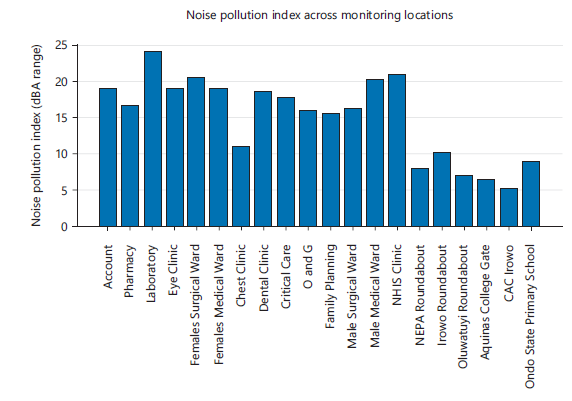
Noise levels within hospital departments ranged from 56.95 to 71.10 dBA (Table 1). The laboratory recorded the highest mean noise level (71.10 dBA), while the Eye Clinic recorded the lowest value (56.95 dBA) as shown in Table 2. Other departments, such as the Accounts unit, Dental Clinic, and Pharmacy, also recorded relatively high noise levels. These values exceed recommended acoustic levels for hospital environments. In Fig. 1, the Laboratory registered the highest noise pollution index at approximately 24.5 dBA, followed closely by the NHIS Clinic (~21.5 dBA). Conversely, the lowest noise levels were recorded at CAC Irowo (~5.3 dBA) and the Aquinas College Gate (~6.5 dBA), showing that indoor hospital environments generally experienced higher noise ranges than the surrounding outdoor monitoring locations.
|
| Table 1: | Noise levels across monitoring locations | |||
| Location | Min (dBA) | Max (dBA) | Mean (dBA) |
| Account | 61.1 | 80.6 | 70.85 |
| Pharmacy | 56.6 | 73.6 | 65.1 |
| Laboratory | 58.8 | 83.4 | 71.1 |
| Eye Clinic | 47.3 | 66.6 | 56.95 |
| Female Surgical Ward | 48.3 | 69.3 | 58.8 |
| Female Medical Ward | 54.7 | 74.2 | 64.45 |
| Chest Clinic | 59.2 | 70.5 | 64.85 |
| Dental Clinic | 55.9 | 74.8 | 65.35 |
| Critical Care | 50.1 | 68.2 | 59.15 |
| O and G | 56.3 | 72.5 | 64.4 |
| Family Planning | 53.7 | 69.5 | 61.6 |
| Male Surgical Ward | 52.3 | 68.8 | 60.55 |
| Male Medical Ward | 48.9 | 69.6 | 59.25 |
| NHIS Clinic | 49.4 | 70.9 | 60.15 |
| NEPA Roundabout | 72.1 | 80.1 | 76.1 |
| Irowo Roundabout | 69.5 | 79.9 | 74.7 |
| Oluwatuyi Roundabout | 71.3 | 78.5 | 74.9 |
| Aquinas College Gate | 73.5 | 80 | 76.75 |
| CAC Irowo | 71.1 | 76.4 | 73.75 |
| Ondo State Primary School | 70.9 | 80 | 75.45 |
| O and G: Obstetrics and Gynaecology, CAC: Christ Apostolic Church, NHIS: National Health Insurance Scheme and NEPA: National Electric Power Authority | |||
| Table 2: | Overall noise statistics | |||
| Parameter | Minimum (dBA) | Maximum (dBA) | Mean (dBA) | Std. Deviation |
| Minimum noise | 47.3 | 73.5 | 59.05 | 9.1 |
| Maximum noise | 66.6 | 83.4 | 74.37 | 5.14 |
| Estimated mean noise | 56.95 | 76.75 | 66.71 | 6.8 |
| Table 3: | Comparative noise statistics | |||
| Category | Mean minimum (dBA) | Mean maximum (dBA) | Mean noise level (dBA) | Std. Deviation |
| Hospital units (n = 14) | 53.76 | 72.32 | 63.04 | 4.33 |
| Vicinity locations (n = 6) | 71.4 | 79.15 | 75.28 | 1.07 |
| Table 4: | Noise level classification | |||
| Noise level (dBA) | Category |
| <40 | Quiet |
| 40-55 | Moderate |
| 55-70 | Noisy |
| >70 | Very noisy |
Table 3 presents the comparative statistical analysis of the measured noise levels across the monitored locations within General Hospital, Akure, and its surrounding environment. The table summarizes key statistical parameters, including the minimum, maximum, mean, and standard deviation, which provide insight into the overall acoustic characteristics of the study area. The results indicate that the hospital units recorded moderate to relatively high mean noise levels, while the surrounding urban locations exhibited considerably higher average sound levels. This pattern suggests that external environmental noise sources, particularly road traffic and urban activities, significantly influence the hospital’s acoustic environment4. The variation between minimum and maximum values across the monitoring locations also reflects the dynamic nature of noise generation within healthcare facilities, where operational activities, human movement, and equipment usage contribute to fluctuations in sound levels throughout the day. The standard deviation values further demonstrate variability in noise exposure across departments, indicating that certain units experience more intense acoustic disturbances than others. Overall, the comparative statistical results highlight the presence of persistent environmental noise within and around the hospital environment, emphasizing the need for improved noise management strategies in healthcare settings.
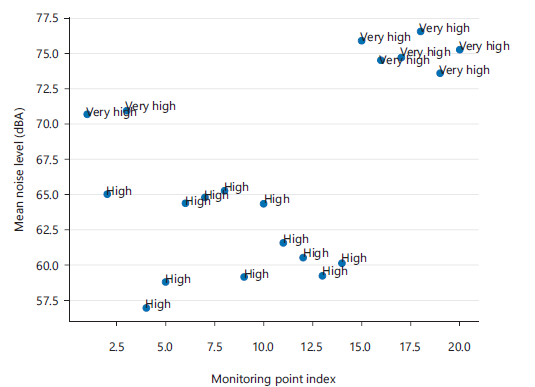
Table 4 presents the classification of the measured environmental noise levels based on standard noise exposure ranges commonly applied in environmental acoustics studies. By categorizing the measured sound levels into defined noise classes6, the table provides a clearer interpretation of the severity and distribution of noise exposure across the monitoring locations. The results indicate that a significant proportion of the hospital departments fall within the high noise category, while several surrounding locations are classified within the very high noise category. This classification pattern demonstrates that the acoustic conditions in the hospital environment exceed levels generally considered desirable for sensitive healthcare settings7.
The classification approach facilitates the identification of locations where noise exposure may pose potential concerns for patient comfort, staff performance, and overall healthcare service delivery. Areas classified under higher noise categories may experience greater acoustic disturbances due to operational activities, human movement, and external environmental noise sources. In particular, the higher classification levels observed in the surrounding locations suggest that urban environmental factors, such as vehicular traffic and commercial activities, contribute substantially to the noise burden around the hospital premises. The noise classification framework presented in Table 4 therefore provides a practical tool for interpreting environmental noise data and supports the development of targeted noise management and mitigation strategies within healthcare environments.
Figure 2 illustrates the noise exposure risk classification results. The distribution of acoustic risk levels across the monitored locations within General Hospital, Akure, and its surrounding environment. The analysis indicates that several hospital units fall within moderate to high noise exposure categories (Table 4 Noise Level Classification), while the external locations surrounding the hospital generally exhibit higher risk classifications. This pattern suggests that environmental noise exposure within the hospital is influenced not only by internal operational activities but also by external urban noise sources. Areas located closer to major access roads and transportation corridors show elevated risk levels, reflecting the contribution of vehicular traffic and urban activities to environmental noise conditions8.
|
The results also demonstrate spatial variation in noise exposure across different hospital departments. Units characterized by higher operational activity, equipment usage, and frequent human movement exhibit relatively higher exposure risk values compared with quieter clinical areas. Such variability highlights the importance of understanding how functional hospital spaces influence acoustic environments and occupational noise exposure.
From a public health perspective, the observed noise exposure risk levels may have implications for both patients and healthcare personnel. Prolonged exposure to elevated environmental noise can contribute to sleep disturbance, increased stress, and reduced comfort among patients undergoing treatment. In addition, continuous exposure to high background noise may affect staff concentration, communication efficiency, and overall workplace performance. The World Health Organization has emphasized the need to maintain relatively low noise levels in healthcare environments to support patient recovery and effective healthcare delivery9.
The findings, therefore, underscore the importance of implementing targeted noise mitigation strategies within hospital environments. Measures such as improved building acoustics, strategic placement of sensitive departments away from major noise sources, and urban traffic management near healthcare facilities could help reduce noise exposure risks. Integrating environmental noise monitoring with spatial analysis techniques may also support more effective planning and management of hospital acoustic environments in rapidly growing urban settings.
Table 5 presents a comparative analysis of hospital noise levels reported in different countries alongside the measurements obtained in the present study conducted at General Hospital, Akure, Nigeria. The results indicate that the mean noise level recorded within hospital departments in this study (63.04 dBA) falls within the range commonly reported in healthcare facilities globally, where hospital noise levels typically vary between approximately 55 and 70 dBA10,14. This similarity suggests that elevated noise levels in hospital environments represent a widespread environmental challenge rather than a problem confined to specific geographic regions. However, the surrounding areas of the hospital in Akure recorded considerably higher mean noise levels exceeding 75 dBA, indicating a strong influence of external urban noise sources. Hospitals located within densely populated urban areas are often exposed to traffic activities, commercial operations, and other forms of urban infrastructure that contribute to environmental noise. Such conditions may lead to the infiltration of external noise into hospital buildings, thereby increasing overall sound exposure within healthcare environments.
| Table 5: | Comparison of hospital noise levels in different countries | |||
| Country | Study location/ Hospital environment |
Mean noise level reported (dBA) |
Comparison with present study (Akure: 63.04 dBA hospital mean; 75.28 dBA surroundings) |
References |
| Nigeria | General Hospital, Akure (present study) | 63.04 dBA (hospital units); 75.28 dBA (vicinity) | Baseline study values | Present study |
| United States | Children’s Hospital, Cincinnati (ICU) | 71.9 dBA | Higher than hospital units in Akure, but comparable to external noise levels | Galindo et al.10 |
| Canada | Hospital of Manitoba ICU | ~68 dBA | Slightly higher than the Akure hospital mean but lower than the surrounding urban noise | Galindo et al.10 |
| Austria | Hospital ICU Environment | 60-65 dBA | Similar to the Akure hospital units | Galindo et al.10 |
| Spain | University Hospital, Valencia | ~55 dBA | Lower than the Akure hospital noise levels | Galindo et al.10 |
| China | General Hospital Wards | 57.3-63.9 dBA | Comparable to the Akure hospital mean values | Deng and Zeng11 |
| South Korea | Adult ICU, Tertiary Hospital | 51.6-58.5 dBA | Lower than the Akure hospital mean noise levels | Yun et al.12 |
| Colombia | University Hospital ICU (Santa Marta) | ~68 dBA | Slightly higher than the Akure hospital units | Galindo et al.10 |
| Pakistan | Public and private hospitals (Lahore) | Departments vary; elevated levels across hospitals | Similar pattern of excessive noise in developing-country hospitals | Baqar et al.13 |
| Republic of Congo | ICU noise measurements | 68-81 dBA | Higher than the Akure hospital mean and comparable to high- noise departments | Nyembwe et al.14 |
| Brazil | Pediatric ICU | 60-70 dBA | Comparable to Akure hospital units | Nyembwe et al.14 |
The findings have important implications for both healthcare management and urban environmental planning. Excessive noise levels may interfere with patient recovery by disrupting sleep, increasing stress, and reducing overall comfort within hospital environments15. High background noise can also affect communication among healthcare professionals and may contribute to occupational stress15,16. The World Health Organization recommends relatively low background noise levels in hospital wards to support effective healthcare delivery, yet the comparison presented in Table 5 indicates that many hospitals worldwide exceed these recommended limits. Consequently, improved hospital acoustic design, noise management practices, and urban planning measures are necessary to reduce environmental noise exposure in healthcare facilities.
Table 6 presents a comparative synthesis of the major sources of hospital noise identified in previous international studies and those observed in the present study at General Hospital, Akure, Nigeria. The table indicates that many of the noise sources documented in earlier research are also evident in the current investigation, suggesting a consistent pattern of hospital noise generation across different healthcare systems. Internal sources such as medical equipment operation, staff communication, patient and visitor activities, and routine hospital operations have been widely recognized as major contributors to hospital noise environments. In the present study, similar activities including equipment usage in clinical units, staff interactions in administrative and clinical departments, and patient movement in outpatient areas were observed to contribute to elevated sound levels within the hospital.
The comparison also highlights the role of infrastructural elements such as door movement, trolley transport, and internal logistics, which can produce intermittent noise peaks within hospital buildings. These findings are consistent with earlier hospital acoustic studies, including those conducted by Busch-Vishniac et al.3, Johansson et al.18, and Busch-Vishniac19, which identified equipment alarms and operational activities as dominant noise sources in healthcare environments. In addition to internal sources, the table demonstrates the strong influence of external environmental noise, particularly transportation activities and urban commercial operations. The present study shows that road traffic and surrounding urban activities are major contributors to the high environmental noise levels recorded near the hospital premises.
| Table 6: | Sources of hospital noise identified in previous studies vs present study (General Hospital, Akure, Nigeria) | |||
| Noise source category |
Specific noise sources identified in previous studies |
Countries/Study locations |
Evidence from previous studies |
Observation in present study (General Hospital, Akure) |
References |
| Medical equipment | Ventilators, patient monitors, infusion pumps, alarms, oxygen systems | USA, Canada, Brazil | Medical device alarms are among the most frequent sources of ICU noise | Equipment activity and diagnostic equipment contribute to elevated noise in laboratory and clinical units | Adesola et al.17 |
| Staff activities | Conversations among nurses and doctors, staff movement, shift change communication | USA, Spain, Austria | Staff communication identified as a major contributor to hospital ward noise | Staff interactions and administrative activities contribute to noise in accounts, pharmacy, and clinical units | Busch-Vishniac et al.3 |
| Patient- related activities | Patient movement, visitors, patient conversations | Brazil, China | Patient and visitor activities increase daytime noise levels in wards | Visitor and patient activities contribute to moderate noise levels | Basner et al.1 |
| Building infrastructure | Doors closing, carts, trolley movement, bed wheels | USA, Taiwan | Mechanical and structural sources produce intermittent noise peaks | Movement of hospital equipment and doors contributes to fluctuations in some units | Busch-Vishniac et al.3 |
| Hospital operations | Cleaning activities, waste collection, internal transport | Spain, China | Routine operational activities increase background noise levels | Operational activities observed during working hours contribute to noise variability | Basner et al.1 |
| External transportation | Road traffic, motorcycles, buses, ambulance sirens | Nigeria, Pakistan, India | Hospitals located near roads experience elevated environmental noise levels | Major contributor to high noise levels recorded in surrounding hospital environment (up to ~76 dBA) | WHO2 |
| Urban commercial activities | Markets, street vendors, commercial services | Nigeria, Pakistan | Urban commercial zones increase environmental noise near healthcare facilities | Nearby urban commercial activities likely contribute to surrounding noise levels | WHO2 |
| Construction and infrastructure development | Urban construction equipment and building activities | China, Taiwan | Construction activities can produce temporary high noise levels | Not dominant during monitoring but possible in urban development phases | Basner et al.1 |
| Emergency services movement | Ambulance sirens and emergency vehicle | USA, UK | Emergency departments experience intermittent noise spikes near high noise levels | Ambulance movements contribute to occasional hospital entrances | Busch-Vishniac et al.3 |
| Environmental background noise | Urban ambient noise from mixed land use | Global urban hospitals | Background urban noise contributes to elevated baseline sound levels | Significant influence observed in surrounding hospital locations | WHO2 |
|
The implications of these findings are significant for healthcare management and environmental planning. Continuous exposure to multiple noise sources within hospital environments may negatively affect patient comfort, disrupt sleep, and interfere with effective communication among healthcare professionals. From an environmental management perspective, the results suggest that hospital noise mitigation requires both internal acoustic management strategies such as regulating staff noise, maintaining medical equipment alarms, and improving building acoustics and external urban planning measures, including traffic control and land-use regulation around healthcare facilities. International environmental health guidance provided by the World Health Organization emphasizes the importance of maintaining low background noise levels in healthcare environments to promote patient recovery and staff efficiency. Therefore, reducing hospital noise pollution will require coordinated interventions involving hospital administrators, environmental regulators, and urban planners to create acoustically supportive healthcare environments in rapidly urbanizing cities.
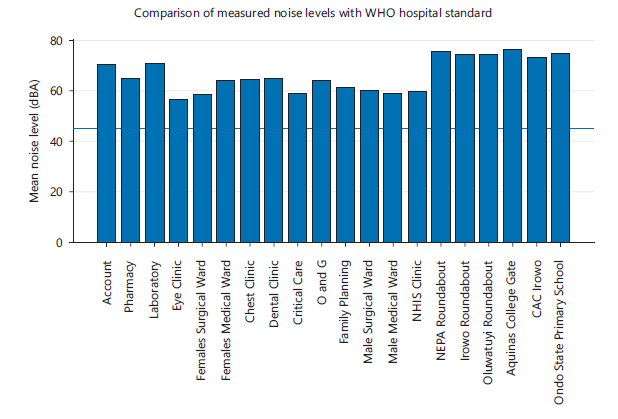
Comparison of observed noise levels with recommended international standards: Environmental noise guidelines developed by WHO provide benchmark limits for acceptable sound levels in sensitive environments such as hospitals. The World Health Organization recommends that background noise levels in hospital wards should not exceed 35 dBA during the daytime and 30 dBA at night to ensure optimal conditions for patient recovery and healthcare delivery. The findings of the present study (Fig. 3) indicate that noise levels recorded within the departments of General Hospital, Akure ranged between 56.95 and 71.10 dBA, with a mean value of 63.04 dBA. These values are considerably higher than the recommended limits for hospital environments. In addition, the surrounding hospital environment recorded even higher noise levels ranging from 73.75 to 76.75 dBA, with an average of 75.28 dBA. The comparison between measured noise levels and recommended standards clearly shows that both internal hospital areas and surrounding environments experience noise exposure far exceeding acceptable limits18,19. In many hospital units, the recorded sound levels were nearly two times higher than recommended background noise levels. Such elevated sound levels may be attributed to a combination of internal operational activities and external environmental noise sources, including vehicular traffic, human movement, equipment operation, and urban commercial activities near the hospital premises.
The high environmental noise levels recorded in the surrounding locations further suggest that the hospital is situated within an acoustically active urban environment, where road traffic and commercial activities significantly contribute to background noise levels. These results are consistent with findings from hospital noise studies conducted in other urban areas around the world3,20, which frequently report sound levels above recommended limits. Previous research has demonstrated that hospital environments often experience sound levels between 50 and 70 dBA, indicating that excessive hospital noise represents a widespread environmental issue.
Implications of environmental noise pollution for healthcare environments: Environmental noise pollution within healthcare facilities can have significant consequences for both patients and healthcare professionals. Hospitals are expected to provide quiet environments that facilitate healing, rest, and effective medical care. However, elevated noise levels may disrupt these conditions in several ways. One major implication relates to patient recovery and well-being. Excessive noise levels may interfere with sleep patterns, increase stress levels, and contribute to psychological discomfort among hospitalized patients. Sleep disruption has been identified as one of the most common effects of hospital noise exposure, particularly in wards where patients require extended periods of rest21.
Another important concern involves communication efficiency among healthcare professionals. High background noise levels can interfere with verbal communication between medical staff, potentially affecting coordination and decision-making during patient care activities. Environmental noise may also influence healthcare worker productivity and performance20. Continuous exposure to elevated noise levels may increase fatigue, reduce concentration, and contribute to occupational stress among medical personnel. Additionally, excessive hospital noise may negatively affect medical equipment alarms and auditory signals, making it difficult for staff to detect important warning sounds in clinical environments.
Implications for urban environmental management: The results of this study also highlight important considerations for urban environmental management and planning. The high noise levels recorded in the hospital surroundings indicate that urban environmental noise can significantly influence the acoustic conditions of healthcare facilities. Hospitals located near major transportation corridors or commercial areas are particularly vulnerable to environmental noise exposure21,22. Urban traffic, commercial activities, and population density often generate persistent background noise that can penetrate hospital buildings and affect internal acoustic conditions. These findings suggest that urban planning policies should consider acoustic protection measures for sensitive institutions such as hospitals, schools, and residential areas. Zoning regulations that restrict high-noise activities near healthcare facilities could help reduce environmental noise exposure.
Furthermore, transportation management strategies such as traffic calming measures, improved road infrastructure, and vehicle noise regulations could contribute to reducing environmental noise levels in urban areas. Environmental monitoring programs are also important for tracking noise pollution trends and supporting evidence-based policy interventions23,24. Regular noise assessments around hospitals can help authorities identify major noise sources and implement appropriate mitigation strategies.
The comparison with international standards demonstrates that environmental noise levels in General Hospital, Akure, substantially exceed recommended limits for healthcare environments. These findings highlight the need for integrated strategies involving hospital management, urban planners, and environmental regulators to reduce noise pollution and improve acoustic conditions within healthcare facilities. Addressing environmental noise pollution is therefore essential not only for public health protection but also for improving the quality of healthcare delivery and urban environmental sustainability.
Based on the findings of this study, several recommendations are proposed to reduce environmental noise levels in hospital environments and improve urban environmental management. Hospital management should develop and enforce internal noise control policies that regulate staff communication, equipment use, and routine clinical activities to ensure a quieter healthcare setting. In addition, hospital infrastructure should be improved through the incorporation of acoustic-friendly designs such as sound-absorbing ceilings, wall panels, and enhanced insulation of doors and windows to minimize internal noise transmission. Regular environmental noise monitoring should also be established to continuously assess noise levels and identify major sources of disturbance, thereby supporting effective intervention strategies. At the urban level, traffic management measures, including speed regulation, restriction of heavy-duty vehicles near hospital premises, and improved road planning, should be implemented to reduce external noise pollution. Urban zoning and land-use policies should further ensure that hospitals and other sensitive facilities are protected from nearby commercial and high-traffic developments. Public awareness campaigns and staff training programs are also necessary to promote behaviors that support a quieter hospital environment. Furthermore, environmental noise management should be strengthened within national environmental and public health policies to ensure regulatory compliance and long-term sustainability. Finally, future research should expand noise monitoring to multiple hospitals and urban settings using advanced tools such as Geographic Information Systems (GIS) to support more comprehensive and evidence-based environmental planning.
CONCLUSION
This study assessed environmental noise pollution in General Hospital, Akure, and its surrounding urban environment. The findings revealed that noise levels within the hospital ranged from 56.95 to 71.10 dBA, while surrounding urban areas recorded even higher levels, averaging 75.28 dBA. These values significantly exceed the World Health Organization’s recommended limits for hospital settings. The results indicate that both internal hospital activities and external urban factors contribute to elevated noise levels. Key internal sources include staff movement, patient activity, and equipment use, while external sources include traffic and commercial activities. The hospital’s location near busy roads and commercial centers further intensifies noise exposure. Such high noise levels may negatively affect patient recovery, sleep quality, and communication among healthcare workers. Overall, the study highlights environmental noise pollution as a serious public health concern requiring urgent mitigation in urban healthcare environments.
ACKNOWLEDGMENT
The author expresses sincere gratitude to Temitope Akinjagunla (Research Assistant) for his role during the field assessment.
REFERENCES
- Basner, M., W. Babisch, A. Davis, M. Brink, C. Clark, S. Janssen and S. Stansfeld, 2014. Auditory and non-auditory effects of noise on health. Lancet, 383: 1325-1332.
- WHO, 2019. Environmental Noise Guidelines for the European Region. World Health Organization, Geneva, Switzerland, ISBN: 9789289053563.
- Busch-Vishniac, I.J., J.E. West, C. Barnhill, T. Hunter, D. Orellana and R. Chivukula, 2005. Noise levels in Johns Hopkins Hospital. J. Acoust. Soc. Am., 118: 3629-3645.
- Abulude, F.O., S.D. Fagbayide, S.A. Olubayode and E.A. Adeoya, 2018. Assessment of noise pollution due to generators in Akure. Environ. Res. Technol., 1: 59-62.
- Abulude, F.O., S.D. Fagbayide and A. Akinnusotu, 2018. Assessments of noise levels from noise sources in Akure, Nigeria: A preliminary study. Iraqi J. Sci., 59: 2195-2210.
- Berglund, B., T. Lindvall and D.H. Schwela, 1999. Guidelines for Community Noise. World Health Organization, Geneva, Switzerland, Pages: 141.
- Goins, L. and L. Hagler, 2007. Noise pollution: A modern plague. South. Med. J., 100: 287-294.
- Yang, G., L. He, Y. Wang and Q. Liu, 2025. Impact of urban elevated complex roads on acoustic environment quality in adjacent areas: A field measurement study. Buildings, 15.
- Stansfeld, S.A. and M.P. Matheson, 2003. Noise pollution: Non-auditory effects on health. Br. Med. Bull., 68: 243-257.
- Galindo, A.P.G., Y.C. Caicedo and A.M. Vélez-Pereira, 2016. Noise level in intensive care units of a public university hospital in Santa Marta (Colombia). Med. Intensiva, 40: 403-410.
- Deng, N. and A. Zeng, 2023. Enhancing the robustness of the disruption metric against noise. Scientometrics, 128: 2419-2428.
- Yun, S.H., H.Y. Choi, S.H. Lee, E.H. Peck and Y.S. Yoo, 2020. Noise level by type in adult intensive care units of a tertiary teaching hospital in Korea. Korean J. Adult Nurs., 32: 1-9.
- Baqar, M., M. Arslan, S.A. Abbasi, U. Ashraf, A. Khalid and H. Zahid, 2018. Noise pollution in the hospital environment of a developing country: A case study of Lahore (Pakistan). Arch. Environ. Occup. Health, 73: 367-374.
- Nyembwe, J.P.K.B., J.O. Ogundiran, M.G. da Silva and N.A.V. Simões, 2023. Evaluation of noise level in intensive care units of hospitals and noise mitigation strategies, case study: Democratic Republic of Congo. Buildings, 13.
- Pal, J., M. Taywade, R. Pal and D. Sethi, 2022. Noise pollution in intensive care unit. Noise Health, 24: 130-136.
- Han, E., H. Kang and Y. Jang, 2025. Noise reduction interventions in intensive care units: A systematic review. Intensive Crit. Care Nurs., 92.
- Adesola, R.O., E. Opuni, I. Idris, O.J. Okesanya, O. Igwe, M.D. Abdulazeez and D.E. Lucero-Prisno, 2024. Navigating Nigeria’s health landscape: Population growth and its health implications. Environ. Health Insights, 18.
- Johansson, L., I. Bergbom and B. Lindahl, 2012. Meanings of being critically ill in a sound-intensive ICU patient room-a phenomenological hermeneutical study. Open Nurs. J., 6: 108-116.
- Busch-Vishniac, I.J., 2022. Hospital acoustics characterization and context. J. Acoust. Soc. Am., 152: A95-A95.
- de Lima Andrade, E., D.C. da Cunha e Silva, E.A. de Lima, R.A. de Oliveira, P.H.T. Zannin and A.C.G. Martins, 2021. Environmental noise in hospitals: A systematic review. Environ. Sci. Pollut. Res., 28: 19629-19642.
- Adams, C., R. Walsan, R. McDonnell and A. Schembri, 2024. As loud as a construction site: Noise levels in the emergency department. Australas. Emerg. Care, 27: 26-29.
- Ajdari, B., N. Salimi, L. Strambini and E.M. Cepolina, 2025. Noise pollution monitoring at pedestrian level by autonomous vehicles in urban areas. Sci. Total Environ., 992.
- Zhang, Z., 2025. Environmental noise monitoring and management in the context of artificial intelligence. Int. J. Educ. Social Dev., 2: 90-95.
- Adams, C., R. Harrison, A. Schembri, M. Junge and R. Walpola, 2024. The silent threat: Investigating sleep disturbances in hospitalized patients. Int. J. Qual. Health Care, 36.
How to Cite this paper?
APA-7 Style
Abulude,
F.O., Mbabie,
J.A. (2026). Environmental Noise Pollution in a Public Healthcare Facility: A Case Study of General Hospital, Akure, Nigeria. Trends in Environmental Sciences, 2(3), 213-224. https://doi.org/10.21124/tes.2026.213.224
ACS Style
Abulude,
F.O.; Mbabie,
J.A. Environmental Noise Pollution in a Public Healthcare Facility: A Case Study of General Hospital, Akure, Nigeria. Trends Env. Sci 2026, 2, 213-224. https://doi.org/10.21124/tes.2026.213.224
AMA Style
Abulude
FO, Mbabie
JA. Environmental Noise Pollution in a Public Healthcare Facility: A Case Study of General Hospital, Akure, Nigeria. Trends in Environmental Sciences. 2026; 2(3): 213-224. https://doi.org/10.21124/tes.2026.213.224
Chicago/Turabian Style
Abulude, Francis, Olawale, and Juliet Akudo Mbabie.
2026. "Environmental Noise Pollution in a Public Healthcare Facility: A Case Study of General Hospital, Akure, Nigeria" Trends in Environmental Sciences 2, no. 3: 213-224. https://doi.org/10.21124/tes.2026.213.224

This work is licensed under a Creative Commons Attribution 4.0 International License.