
Mitigating Air Pollution: Understanding the Nexus between Livestock Farming and Environmental Health
-
Francis Olawale Abulude


Environmental and Sustainable Research Group, Science and Education Development Institute, Akure, Ondo State, Nigeria
Julius Gbemiga OyetundeDepartment of Chemical Sciences, Bamidele Olumilua University of Education, Science, and Technology, Ikere 361101, Nigeria
Ademola AdamuDepartment of Chemical Sciences, Bamidele Olumilua University of Education, Science, and Technology, Ikere 361101, Nigeria
| Received 16 Oct, 2025 |
Accepted 21 Jan, 2026 |
Published 31 Mar, 2026 |
Livestock farming is a significant contributor to air pollution, emitting pollutants such as ammonia, methane, Volatile Organic Compounds (VOCs), and particulate matter. Despite growing concerns, there remains a need for comprehensive understanding and effective mitigation strategies. This review aims to address this gap by synthesizing existing literature, identifying key challenges, and proposing mitigation strategies for reducing air pollution from livestock farming. This article provides a comprehensive analysis of the factors influencing emissions from different types of livestock operations, including feedlot, dairy, and poultry farms. It highlights the spatial and temporal variability of emissions, the interaction with environmental factors, and the effectiveness of various mitigation technologies and management practices. The aim of this article to comprehensively examine the linkages between livestock farming and air pollution, elucidate the mechanisms driving emissions, assess their impacts on air quality and public health, and propose strategies for mitigating environmental degradation. A systematic review of the literature was conducted to identify relevant studies on emissions from livestock farming and their mitigation. Key databases were searched for peer-reviewed articles, government reports, and grey literature. The analysis reveals that feed composition, housing design, manure management, and environmental conditions significantly influence emissions from livestock operations. Nutritional interventions, advanced manure management technologies, emission control systems, and policy interventions are identified as promising strategies for reducing air pollution from livestock farming. Livestock farming is a significant source of air pollution, but effective mitigation strategies are available. By addressing the factors driving emissions and implementing targeted interventions, the environmental impacts of livestock production can be minimized while ensuring food security and economic sustainability.
| Copyright © 2026 Abulude et al. This is an open-access article distributed under the Creative Commons Attribution License, which permits unrestricted use, distribution, and reproduction in any medium, provided the original work is properly cited. |
INTRODUCTION
In recent decades, global attention has increasingly turned towards the detrimental impacts of air pollution on public health and the environment. While vehicular emissions and industrial activities often dominate discussions on air quality, the significant contribution of livestock farming to atmospheric pollution has garnered attention. Livestock farming, particularly intensive operations, emits various pollutants, including ammonia, methane, and particulate matter, which can degrade air quality and pose risks to human health.
Livestock farming is a cornerstone of global food production, providing essential nutrients and livelihoods for millions of people worldwide. However, the intensification and industrialization of animal agriculture have led to significant environmental challenges, including air pollution. Livestock operations emit various pollutants into the atmosphere, contributing to regional and global air quality degradation.
Ammonia (NH3) is one of the primary pollutants emitted from livestock farming, originating mainly from animal waste and nitrogen-based fertilizers used in feed production1. High concentrations of atmospheric ammonia can lead to the formation of fine particulate matter (PM2.5) and ammonium nitrate aerosols, which have adverse effects on respiratory health and ecosystem integrity2.
Methane (CH4) is another potent greenhouse gas emitted by livestock, primarily through enteric fermentation in ruminant animals such as cattle, sheep, and goats3. Methane not only contributes to climate change but also indirectly affects air quality by reacting with other atmospheric compounds to form ozone, a key component of smog4.
Volatile Organic Compounds (VOCs) emitted from livestock operations include a wide range of organic chemicals, such as aldehydes, ketones, and aromatic hydrocarbons, which can react with nitrogen oxides (NOx) in the atmosphere to form ground-level ozone and secondary organic aerosols5. Poultry and swine facilities are significant sources of VOC emissions, which can contribute to local air quality concerns, especially in areas with high animal density.
Particulate matter (PM), consisting of airborne particles of various sizes and compositions, is emitted from livestock housing, feedlots, and manure storage facilities through dust resuspension, animal activities, and mechanical processes6. The PM can pose respiratory health risks, exacerbating asthma and other pulmonary diseases, and contribute to atmospheric haze and reduced visibility7.
The significance of addressing air pollution from livestock farming extends beyond environmental concerns to encompass public health, agricultural sustainability, and climate change mitigation. As global demand for animal products continues to rise, it is imperative to develop effective strategies for reducing emissions from livestock operations while ensuring food security and economic viability for farmers.
Despite growing awareness, there remains a need for a comprehensive understanding and evaluation of the relationship between livestock farming and air pollution. This review aims to address this gap by synthesizing existing literature, identifying key challenges, and proposing strategies for mitigating the environmental impacts of livestock production on air quality. Livestock farming contributes significantly to air pollution through emissions of ammonia, methane, Volatile Organic Compounds (VOCs), and particulate matter. These pollutants have been linked to respiratory diseases, environmental degradation, and climate change. However, the complex interplay of factors influencing emissions from livestock operations and their subsequent effects on air quality presents challenges for effective mitigation strategies.
Given the substantial environmental and public health implications, understanding the nexus between livestock farming and air pollution is crucial for policymakers, researchers, and stakeholders. By elucidating the sources, mechanisms, and impacts of livestock-related emissions, this review aims to inform evidence-based decision-making and facilitate the development of sustainable agricultural practices. This review focuses primarily on the emissions of ammonia, methane, VOCs, and particulate matter from livestock farming and their effects on air quality. While related topics such as water pollution and animal welfare are important, they fall outside the scope of this review.
This review aims to comprehensively examine the linkages between livestock farming and air pollution, elucidate the mechanisms driving emissions, assess their impacts on air quality and public health, and propose strategies for mitigating environmental degradation. The objectives are:
| • | To review existing literature on the emissions of ammonia, methane, VOCs, and particulate matter from livestock farming | |
| • | To analyze the factors influencing emissions from different types of livestock operations, including feedlot, dairy, and poultry farms | |
| • | To evaluate the health and environmental impacts of air pollutants emitted by livestock on local and global scales | |
| • | To identify and discuss current and potential mitigation strategies for reducing air pollution from livestock farming, including technological innovations and policy interventions |
MATERIALS AND METHODS
In this article, a comprehensive literature review using academic databases (2012-2025) such as PubMed, Google Scholar, and Scopus to identify relevant peer-reviewed articles, books, and reports related to air pollution from livestock farming was conducted using keywords which includes, keywords included "livestock emissions," "air pollution," "feedlot," "dairy farming," "poultry farming," and "manure management". Selected studies were based on relevance to the topic, publication date, and credibility of the source.
Prioritized peer-reviewed articles and authoritative reports from reputable organizations such as the Food and Agriculture Organization (FAO) and the Environmental Protection Agency (EPA). The extracted relevant data and information from selected studies include emission factors, influencing factors, mitigation strategies, and environmental impacts associated with different types of livestock operations.
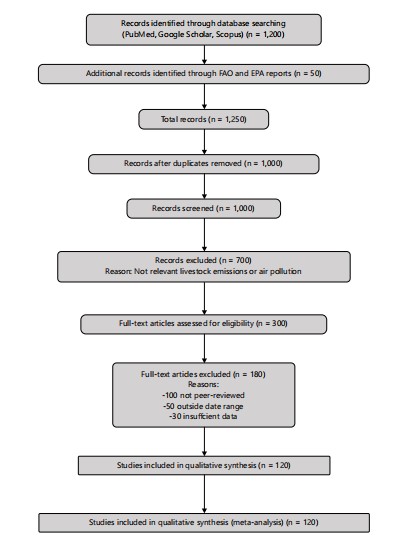
Figure 1 depicts the PRISMA diagram of the review work. About 1,200 records were identified using the databases, and another 50 reports were added from FAO and EPA. Duplicate copies were removed and 700 not relevant to livestock emission. Included were studies in qualitative and quantitative syntheses.
Findings from the literature review were synthesized to identify key factors influencing emissions from feedlot, dairy, and poultry farms. The impact of feed composition, housing systems, manure handling practices, climate conditions, and technological advancements on emissions levels was analysed. A framework was categorized and the factors influencing emissions from livestock operations, including feedlot, dairy, and poultry farms, based on the synthesized literature, were analysed. The findings within the context of current knowledge gaps, challenges, and opportunities for emissions reduction in the livestock sector were developed.
EXISTING LITERATURE ON THE EMISSIONS OF AMMONIA, METHANE, VOCS, AND PARTICULATE MATTER FROM LIVESTOCK FARMING
The literature provides a comprehensive overview of the sources and magnitude of emissions from various livestock species and production systems. Studies have quantified the emissions of ammonia, methane, VOCs, and particulate matter from different stages of animal husbandry, including feed production, animal digestion, and manure management. Researchers have developed emission factors and modeling approaches to estimate the emissions of air pollutants from livestock operations. These methods consider factors such as animal species, diet composition, housing systems, and climate conditions to accurately assess emission rates and spatial distribution8. Also, the spatial and temporal variability of livestock emissions, influenced by factors such as geographic location, farm size, management practices, and seasonal changes. Understanding this variability is essential for developing targeted mitigation strategies and assessing the localized impacts of air pollution9.
|
Studies have evaluated the effectiveness of various technologies and management practices for reducing emissions from livestock farming. These include dietary modifications, housing improvements, anaerobic digestion, biofiltration, and manure treatment techniques. Comparative analyses provide insights into the feasibility and cost-effectiveness of different mitigation options10. It explored the complex interactions between livestock emissions and other environmental factors, such as land use, soil properties, and atmospheric conditions. These interactions influence the fate and transport of air pollutants, as well as their secondary effects on ecosystems and human health.
Cattaneo et al.11 explained and outlined emissions assessments, examined emission assessment guides, discussed the connection among the emissions assessment and animal housing and manure facilities, as well as the pertinent emission parameters and algorithms, examined the instruments used used to analyze the emissions assessments (such as models and software), demonstrated the manner in which to assess and enhance emissions assessments, examined emissions mitigation strategies, and provided instances and theories of national emissions inventories that are currently available for several nations.
Animal production operations like manure handling, floor washing, feedlot surface, and dung are the major contributor of air pollution in livestock farm. The rates of odour, manure gases, microbes, particulates, and other constituents’ generation vary with weather, time, species, and housing, as well as manure handling system, feed type, and management method. The emission factor is typically used to refer to emission expressed in terms of animal unit. Employing specific practices can reduce ammonia, hydrogen sulphide and odour emissions. A number of practices are available but not all are suited for all operations. Careful consideration and selection will help ensure that you achieve the desired results and reduce the impact of harmful gases on animal, and worker.
FACTORS INFLUENCING EMISSIONS FROM DIFFERENT TYPES OF LIVESTOCK OPERATIONS, INCLUDING FEEDLOT, DAIRY, AND POULTRY FARMS
The literature emphasizes the role of feed composition and nutrient management practices in influencing emissions from livestock operations. Feed ingredients, such as grains, forages, and supplements, can affect the digestion process and subsequent production of gases like methane and ammonia12. For example, diets high in carbohydrates and low in fiber can promote enteric fermentation and methane production in ruminant animals, while the inclusion of additives such as ionophores and tannins can inhibit methanogenesis. Additionally, nutrient management practices, including the formulation of balanced diets and the optimization of feed efficiency, play a crucial role in minimizing nitrogen excretion and ammonia emissions from livestock13. By adopting strategies such as precision feeding, dietary manipulation, and supplementation with feed additives, farmers can improve nutrient utilization efficiency, reduce waste production, and mitigate environmental impacts associated with feedlot, dairy, and poultry farming.
Studies have investigated the impact of housing design and ventilation systems on air quality within livestock facilities. Factors such as building layout, stocking density, bedding material, and air exchange rates can influence the dispersion of pollutants and the accumulation of harmful gases. Housing and ventilation systems play a crucial role in determining emissions from different types of livestock operations, including feedlot, dairy, and poultry farms. The design and management of housing facilities directly influence air quality, animal health, and production efficiency. Adequate ventilation is essential for maintaining optimal indoor air quality by removing moisture, odors, and airborne pollutants, such as ammonia and particulate matter. Proper ventilation systems ensure sufficient airflow and temperature regulation, which are critical for reducing stress levels and respiratory diseases in livestock.
In dairy farming, well-designed barns with effective ventilation systems help minimize ammonia emissions from manure storage and reduce the risk of mastitis and other respiratory ailments in dairy cows. Feedlots utilize open-air pens or partially enclosed buildings with natural or mechanical ventilation systems to mitigate heat stress and manage odors and emissions from manure accumulation. Poultry houses are equipped with ventilation systems that control temperature, humidity, and ammonia levels, ensuring optimal conditions for bird health and performance.
Effective housing and ventilation management strategies include the use of high-efficiency fans, evaporative cooling pads, and curtain sidewalls to enhance air exchange rates and reduce airborne pollutants. Additionally, proper manure management practices, such as regular cleaning, composting, and manure storage covers, can further mitigate emissions from livestock housing facilities.
Manure management practices play a critical role in determining emissions from livestock farms. Storage methods, such as lagoons, tanks, composting, and anaerobic digestion, can affect the release of gases like methane and ammonia into the atmosphere14. Manure handling and storage practices significantly influence emissions from different types of livestock operations, including feedlot, dairy, and poultry farms. Improper management of manure can lead to the release of various air pollutants, including methane, ammonia, hydrogen sulfide, and Volatile Organic Compounds (VOCs). Factors such as manure composition, storage duration, and management techniques play critical roles in determining emission rates and environmental impacts.
In feedlot operations, large quantities of manure are generated, requiring effective storage and handling systems to minimize emissions. Open-air manure storage facilities, commonly used in feedlots, can result in significant emissions of ammonia and methane due to anaerobic decomposition processes15. Dairy farms often utilize liquid manure storage systems, such as lagoons or tanks, which can emit methane and ammonia during storage and agitation. Poultry farms typically employ dry litter systems, where manure is collected and stored in-house or in outdoor piles, leading to emissions of ammonia and volatile organic compounds16.
Various management practices can be implemented to mitigate emissions from manure handling and storage. These include covering manure storage facilities to reduce methane emissions, optimizing storage duration to minimize anaerobic decomposition, and incorporating additives to mitigate odors and ammonia emissions. Additionally, technologies such as anaerobic digestion and composting can be utilized to treat manure and capture biogas for energy production, thereby reducing greenhouse gas emissions and environmental impacts.
Environmental factors, including temperature, humidity, wind speed, and solar radiation, interact with livestock operations to influence emissions. Climatic variations can affect animal metabolism, nutrient utilization, and microbial activity, thereby altering emission rates17. Climate and environmental conditions significantly influence emissions from different types of livestock operations, including feedlot, dairy, and poultry farms. Various factors, such as temperature, humidity, wind speed, and precipitation levels, can impact the rate of emissions and the dispersion of pollutants in the surrounding atmosphere.
In hot and humid climates, such as those found in tropical regions, livestock are more susceptible to heat stress, leading to increased respiration rates and higher emissions of methane and ammonia. Conversely, cold weather conditions can affect ventilation rates and indoor air quality in housing facilities, potentially leading to the accumulation of airborne pollutants such as ammonia and hydrogen sulfide.
Environmental factors also play a crucial role in the degradation of manure and organic matter, which can release additional gases such as methane and nitrous oxide. Moisture content, soil type, and microbial activity influence the rates of anaerobic decomposition and gas production in manure storage facilities and land application areas.
Moreover, prevailing wind patterns and topographical features can affect the dispersion of emissions from livestock operations, potentially leading to localized air quality issues and environmental impacts in nearby communities. Understanding the interactions between climate, environmental conditions, and livestock emissions is essential for developing effective mitigation strategies and promoting sustainable livestock farming practices.
The adoption of Best Management Practices (BMPs) and technological innovations can help mitigate emissions from livestock operations. Strategies such as dietary manipulation, manure treatment, emission capture systems, and precision feeding have been shown to reduce environmental impacts while enhancing production efficiency. Management practices and technology adoption significantly influence emissions from different types of livestock operations, including feedlot, dairy, and poultry farms. Effective management practices can help reduce emissions of greenhouse gases (GHGs) such as methane and nitrous oxide, as well as criteria pollutants like ammonia and particulate matter.
One key management practice is the implementation of dietary strategies to optimize feed efficiency and reduce enteric fermentation in ruminant animals. For example, the use of feed additives such as ionophores and tannins can inhibit methanogenesis in the rumen, leading to lower methane emissions per unit of feed consumed18. Additionally, precision feeding techniques and balanced ration formulations can improve nutrient utilization efficiency and reduce nitrogen excretion, thereby minimizing ammonia emissions from manure19.
Technological innovations also play a crucial role in emissions reduction from livestock operations. Anaerobic digestion systems can be used to treat manure and capture biogas for energy production, thereby mitigating methane emissions and reducing reliance on fossil fuels. Similarly, biofiltration systems can be installed to remove odors and volatile organic compounds from ventilation air, improving air quality and reducing nuisance odors in surrounding communities.
Furthermore, the adoption of best management practices such as proper manure management, regular maintenance of housing facilities, and optimization of ventilation systems can help minimize emissions and environmental impacts from livestock operations20. However, the adoption of these practices may vary depending on factors such as farm size, financial resources, and regulatory requirements.
HEALTH AND ENVIRONMENTAL IMPACTS OF AIR POLLUTANTS EMITTED BY LIVESTOCK ON LOCAL AND GLOBAL SCALES
The literature highlights the adverse health effects of air pollutants emitted by livestock farming on nearby communities. Exposure to ammonia, particulate matter, and odorous compounds can exacerbate respiratory diseases, such as asthma and Chronic Obstructive Pulmonary Disease (COPD), and increase the risk of cardiovascular problems21. Human health impacts of air pollutants emitted by livestock farming are a significant concern, particularly for individuals living in proximity to intensive livestock operations. Exposure to pollutants such as ammonia, particulate matter, and Volatile Organic Compounds (VOCs) can lead to respiratory diseases, exacerbate existing conditions such as asthma and Chronic Obstructive Pulmonary Disease (COPD), and increase the risk of cardiovascular problems. Studies have shown that communities near livestock facilities experience higher rates of respiratory symptoms, including coughing, wheezing, and shortness of breath, as well as increased hospital admissions for respiratory illnesses21. Furthermore, exposure to airborne pollutants from livestock farming can have long-term health effects, such as reduced lung function and increased susceptibility to respiratory infections.
Livestock emissions contribute to environmental degradation through the deposition of nitrogen and phosphorus compounds in terrestrial and aquatic ecosystems. Ammonia deposition can lead to soil acidification and eutrophication of water bodies, disrupting nutrient cycles and impairing biodiversity2. Environmental degradation caused by air pollutants emitted by livestock farming encompasses various impacts on terrestrial and aquatic ecosystems. Nitrogen and phosphorus compounds released from ammonia deposition can lead to soil acidification, eutrophication of water bodies, and loss of biodiversity2. Excessive nutrient loading from livestock manure can result in algal blooms, oxygen depletion, and fish kills in rivers, lakes, and coastal areas. Furthermore, ammonia emissions contribute to atmospheric nitrogen deposition, which can disrupt nutrient cycles, alter soil pH, and affect plant community composition. Livestock farming also generates greenhouse gas emissions, including methane and nitrous oxide, which contribute to global warming and climate change, leading to shifts in precipitation patterns, sea level rise, and ecosystem disruptions22.
Methane emissions from enteric fermentation and manure management contribute significantly to global warming potential (GWP)3. Over 20 years, methane has a far greater heating capacity compared to carbon dioxide, making it a potent contributor to global warming. Addressing methane emissions from livestock is therefore crucial for mitigating climate change impacts. Methane and nitrous oxide gas emissions from raising cattle are two primary airborne contaminants that contribute to global warming. Methane is a powerful greenhouse gas that contributes to environmental degradation and global warming, having a far greater warming potential than carbon dioxide during 20 years. Enteric fermentation in ruminant animals and manure management practices are major sources of methane emissions from livestock operations3. Additionally, nitrous oxide emissions from soil management and fertilizer application in livestock farming contribute to climate change by enhancing the greenhouse effect and depleting stratospheric ozone. Climate change impacts associated with livestock emissions include shifts in precipitation patterns, altered growing seasons, reduced agricultural productivity, and increased frequency of extreme weather events, posing risks to food security, water resources, and ecosystem stability.
Livestock emissions can have cascading effects on ecosystems, including changes in soil microbial communities, nutrient cycling, and plant productivity. Excessive nitrogen deposition from ammonia emissions can alter soil pH and microbial activity, affecting nutrient availability and plant diversity23. Air pollutants emitted by livestock farming have significant impacts on terrestrial and aquatic ecosystems. Ammonia deposition from livestock emissions can alter soil pH, disrupt nutrient cycling, and affect plant community composition, leading to changes in ecosystem structure and function. Excessive nitrogen deposition can also contribute to soil acidification, which negatively impacts soil microbial communities and soil fertility. Furthermore, ammonia emissions from livestock operations can lead to eutrophication of water bodies, harmful algal blooms, and oxygen depletion, causing ecological imbalances and declines in aquatic biodiversity. Additionally, methane emissions from enteric fermentation and manure management contribute to climate change, which further affects ecosystem dynamics and resilience at local and global scales3.
Air pollution from livestock farming imposes social and economic costs on affected communities, including healthcare expenses, reduced agricultural productivity, and loss of ecosystem services. The economic burden of air pollution underscores the importance of implementing mitigation measures to protect public health and environmental quality. The social and economic costs associated with air pollutants emitted by livestock farming are multifaceted and significant. In addition to adverse health effects on nearby communities, including respiratory ailments and decreased quality of life, there are considerable economic burdens. Healthcare costs related to treating air pollution-related illnesses, such as asthma and cardiovascular diseases, can strain healthcare systems and impose financial hardships on affected individuals and families. Moreover, air pollution from livestock farming can result in reduced agricultural productivity, damage to crops and vegetation, and degradation of natural resources, leading to economic losses for farmers and rural communities24. Additionally, nuisance odors and air quality issues can negatively impact property values and tourism, further exacerbating economic challenges in affected regions25.
CURRENT AND POTENTIAL MITIGATION STRATEGIES FOR REDUCING AIR POLLUTION FROM LIVESTOCK FARMING, INCLUDING TECHNOLOGICAL INNOVATIONS AND POLICY INTERVENTIONS
Manipulating the composition of animal diets through additives such as ionophores, enzymes, and dietary supplements can help improve nutrient utilization and reduce enteric methane emissions. For example, the inclusion of lipid supplements or tannins in ruminant diets has been shown to inhibit methanogenesis9.
Nutritional interventions in livestock farming involve modifying animal diets to reduce the production of air pollutants such as methane and ammonia. This can be achieved through the inclusion of additives such as ionophores, enzymes, and dietary supplements. For example, research has shown that the supplementation of ruminant diets with lipid supplements or tannins can inhibit methanogenesis, thereby reducing methane emissions from enteric fermentation9. Similarly, the manipulation of dietary protein and carbohydrate sources can optimize nutrient utilization and minimize nitrogen excretion, thereby reducing ammonia emissions from manure12.
Implementing advanced manure management technologies, such as anaerobic digestion, composting, and aerobic treatment, can mitigate emissions of methane, ammonia, and odorous compounds from livestock waste. These technologies not only capture biogas for energy production but also reduce the environmental footprint of manure application. Manure management technologies play a crucial role in mitigating air pollution from livestock farming by reducing emissions of methane, ammonia, and odorous compounds from manure storage and handling. Anaerobic digestion, composting, and aerobic treatment are among the most commonly employed technologies for treating livestock manure. In anaerobic digestion, organic matter is broken down by microorganisms without oxygen, resulting in biogas (a mixture of CH4 and CO2 which might be collected and utilized to produce electricity. By encouraging the aerobic breakdown of organic waste, composting reduces pathogens and odors while producing long-lasting, nutrient-rich compost26. Aerobic treatment systems utilize mechanical aeration to enhance microbial activity and accelerate the decomposition of organic matter, reducing odor emissions and promoting nutrient recovery.
Installing emission control systems, such as biofilters, scrubbers, and biochar reactors, in livestock housing facilities can help capture and treat airborne pollutants before they are released into the atmosphere. These technologies remove odors, particulate matter, and harmful gases, thereby improving air quality and reducing nuisance complaints. Emission control systems are essential for mitigating air pollution from livestock farming by capturing and treating airborne pollutants before they are released into the atmosphere. These systems utilize various technologies such as biofilters, scrubbers, and biochar reactors to remove odors, particulate matter, and harmful gases from livestock housing facilities. Biofilters consist of porous media (e.g., compost, wood chips) colonized by microorganisms that metabolize and degrade odorous compounds and Volatile Organic Compounds (VOCs). Scrubbers employ chemical or physical processes to remove gases and particulates from air streams by contacting them with water or other scrubbing liquids. Biochar reactors utilize activated charcoal to adsorb and neutralize odors and volatile compounds, providing an effective and sustainable solution for air pollution control in livestock operations.
Implementing vegetative buffers and conservation practices around livestock farms can help mitigate air pollution by trapping dust particles, absorbing ammonia, and reducing odor dispersion. Planting trees, grasses, and shrubs can also sequester carbon dioxide and mitigate greenhouse gas emissions27. Land use and vegetative buffers are effective mitigation strategies for reducing air pollution from livestock farming by trapping dust particles, absorbing ammonia, and reducing odor dispersion. Vegetative buffers, such as grasslands, hedgerows, and riparian buffers, act as physical barriers that intercept and filter airborne pollutants before they reach sensitive receptors, such as nearby communities or water bodies28. These buffers also provide habitat for beneficial microorganisms that can metabolize and degrade odorous compounds, further improving air quality. Additionally, vegetative buffers enhance landscape aesthetics, biodiversity, and ecosystem resilience, contributing to sustainable land management practices in livestock farming regions.
Enforcing policies and regulations aimed at reducing emissions from livestock farming is crucial for achieving environmental goals. Governments can implement emission standards, incentive programs, and market-based mechanisms to encourage the adoption of cleaner technologies and sustainable practices29.
Policy and regulatory measures are crucial for mitigating air pollution from livestock farming by setting standards, providing incentives, and enforcing compliance with environmental regulations. Governments can implement a range of policies at local, national, and international levels to reduce emissions from livestock operations and promote sustainable agricultural practices. For example, emission standards and permit requirements can be established to limit the release of pollutants such as ammonia, methane, and particulate matter from livestock facilities30. In addition, incentive programs, tax incentives, and subsidies can be offered to encourage the adoption of cleaner technologies and practices, such as anaerobic digestion, biofiltration, and low-emission feeding strategies31. Furthermore, market-based mechanisms, such as emissions trading schemes and carbon offset programs, can provide economic incentives for reducing greenhouse gas emissions from livestock farming while generating revenue for environmental conservation efforts32.
CONCLUSION
Emissions from livestock operations present significant environmental and health challenges, affecting air quality, human well-being, and climate change. Key factors influencing emission levels include feed composition, housing systems, manure management, climate conditions, and technological practices. Effective mitigation requires an integrated approach combining best management practices, technological innovations, and regulatory measures. Optimizing feed efficiency, improving manure handling, and adopting advanced ventilation and emission control technologies can reduce the environmental footprint of livestock operations while maintaining productivity and profitability. Collaboration among farmers, researchers, policymakers, and industry stakeholders is crucial for achieving sustainable emissions reduction. Addressing these challenges demands continuous innovation and concerted efforts to protect public health, minimize environmental impacts, and promote sustainability in agriculture.
SIGNIFICANCE STATEMENT
This study highlights the critical environmental and health impacts of livestock emissions and underscores the importance of integrated mitigation strategies. By identifying key factors influencing emissions and proposing practical interventions, the findings provide valuable guidance for policymakers, farmers, and industry stakeholders to reduce environmental footprints, enhance public health, and promote sustainable livestock production.
REFERENCES
- Choi, L.Y., S.Y. Lee, H. Jeong, J. Park, S.W. Hong, K.S. Kwon and M. Song, 2023. Ammonia and particulate matter emissions at a Korean commercial pig farm and influencing factors. Animals, 13.
- Sutton, M.A. and S. Ayyappan, 2013. Our Nutrient World: The Challenge to Produce More Food and Energy with Less Pollution. Centre for Ecology & Hydrology, Bailrigg, England, ISBN: 9781906698409, Pages: 114.
- Gerber, P.J., 2013. Tackling Climate Change through Livestock : A Global Assessment of Emissions and Mitigation Opportunities. FAO, Rome, Italy, ISBN-9789251079218, Pages: 115.
- McDuffie, E.E., M.C. Sarofim, W. Raich, M. Jackson and H. Roman et al., 2023. The social cost of ozone‐related mortality impacts from methane emissions. Earth's Future, 11.
- Chen, M., S. Li, L. Yun, Y. Xu and D. Chen et al., 2024. Characteristics of volatile organic compounds emitted from airport sources and their effects on ozone production. Toxics, 12.
- Yang, X., N. Haleem, A. Osabutey, Z. Cen, K.L. Albert and D. Autenrieth, 2022. Particulate matter in swine barns: A comprehensive review. Atmosphere, 13.
- Kyung, S.Y. and S.H. Jeong, 2020. Particulate-matter related respiratory diseases. Tuberculosis Respir. Dis., 83: 116-121.
- Parker, A.C., W.J. Sawyer, K.A. Riedinger, N.A. Bugher, A.J. Hart and D.L. Plata, 2025. Dairy barn methane levels and feasibility of thermal catalytic oxidation for net climate benefit. Environ. Sci. Technol., 59: 26428-26439.
- Misselbrook, T., A. del Prado and D. Chadwick, 2013. Opportunities for reducing environmental emissions from forage-based dairy farms. Agric. Food Sci., 22: 93-107.
- Wang, Y., K. Chen, S. Yuan, J. Liu, J. Guo and Y. Guo, 2025. Research progress on methane emission reduction strategies for dairy cows. Dairy, 6.
- Cattaneo, M., C. Tayà, L. Burgos, L. Morey and J. Noguerol et al., 2023. Assessing ammonia and greenhouse gas emissions from livestock manure storage: Comparison of measurements with dynamic and static chambers. Sustainability, 15.
- McGinn, S.M., K.A. Beauchemin, T. Coates and D. Colombatto, 2004. Methane emissions from beef cattle: Effects of monensin, sunflower oil, enzymes, yeast, and fumaric acid. J. Anim. Sci., 82: 3346-3356.
- Kinley, R.D., R. de Nys, M.J. Vucko, L. Machado and N.W. Tomkins, 2016. The red macroalgae Asparagopsis taxiformis is a potent natural antimethanogenic that reduces methane production during in vitro fermentation with rumen fluid. Anim. Prod. Sci., 56: 282-289.
- Hristov, A.N., J. Oh, F. Giallongo, T.W. Frederick and M.T. Harper et al., 2015. An inhibitor persistently decreased enteric methane emission from dairy cows with no negative effect on milk production. Proc. Natl. Acad. Sci. U.S.A., 112: 10663-10668.
- Liu, Z., Y. Liu, J.P. Murphy and R. Maghirang, 2017. Ammonia and methane emission factors from cattle operations expressed as losses of dietary nutrients or energy. Agriculture, 7.
- Pereira, J.L.S., C. Garcia and H. Trindade, 2023. Review of Measures to Control Airborne Pollutants in Broiler Housing. In: Air Pollution-Latest Status and Current Developments, Eyvaz, M., A. Albahnasawi, M.Y.D. Alazaiza and J.K. Summers (Eds.), IntechOpen, London, United Kingdom, ISBN: 978-1-83768-918-7.
- Rotz, C.A., 2018. Modeling greenhouse gas emissions from dairy farms. J. Dairy Sci., 101: 6675-6690.
- Hristov, A.N., J. Oh, J.L. Firkins, J. Dijkstra and E. Kebreab et al., 2013. SPECIAL TOPICS-Mitigation of methane and nitrous oxide emissions from animal operations: I. A review of enteric methane mitigation options. J. Anim. Sci., 91: 5045-5069.
- Schlau, N., L.L. Guan and M. Oba, 2012. The relationship between rumen acidosis resistance and expression of genes involved in regulation of intracellular pH and butyrate metabolism of ruminal epithelial cells in steers. J. Dairy Sci., 95: 5866-5875.
- Vigan, A., M. Hassouna, N. Guingand, C. Brame and N. Edouard et al., 2019. Development of a database to collect emission values for livestock systems. J. Environ. Qual., 48: 1899-1906.
- Mannan, M. and S.G. Al-Ghamdi, 2021. Indoor air quality in buildings: A comprehensive review on the factors influencing air pollution in residential and commercial structure. Int. J. Environ. Res. Public Health, 18.
- Pachauri, R.K., M.R. Allen, V.R. Barros, J. Broome and W. Cramer et al., 2014. Climate Change 2014: Synthesis Report. Contribution of Working Groups I, II and III to the Fifth Assessment Report of the Intergovernmental Panel on Climate Change. Intergovernmental Panel on Climate Change, Geneva, Switzerland, ISBN: 978-92-9169-143-2, Pages: 151.
- Rajput, A.S., M.K. Patra and K.S. Jisna, 2023. Air quality and emission from livestock production system: A review. Trends Agric. Sci., 2: 168-172.
- Thurston, G.D. and M.L. Bell, 2020. The Human Health Co-benefits of Air Quality Improvements Associated with Climate Change Mitigation. In: Climate Change and Global Public Health, Pinkerton, K.E. and W.N. Rom (Eds.), Springer International Publishing, Switzerland, ISBN: 978-3-030-54746-2, pp: 181-202.
- Guadalupe-Fernandez, V., M. de Sario, S. Vecchi, L. Bauleo, P. Michelozzi, M. Davoli and C. Ancona, 2021. Industrial odour pollution and human health: A systematic review and meta-analysis. Environ. Health, 20.
- Medupin, R.O., K. Ukoba and T.C. Jen, 2025. Green Solutions for Sustainability. 1st Edn., CRC Press, Boca Raton, ISBN: 9781003633723, Pages: 354.
- Galindo, F.S., J.S. Strock and P.H. Pagliari, 2022. Impacts of corn stover management and fertilizer application on soil nutrient availability and enzymatic activity. Sci. Rep., 12.
- Lind, L., E.M. Hasselquist and H. Laudon, 2019. Towards ecologically functional riparian zones: A meta-analysis to develop guidelines for protecting ecosystem functions and biodiversity in agricultural landscapes. J. Environ. Manage., 249.
- Etukudoh, E.A., A.A. Umoh, A. Hamdan, K.I. Ibekwe and S. Sonko, 2024. Carbon emission reduction strategies: A global policy review and analysis of effectiveness. Econ. Growth Environ. Sustainability, 3: 69-75.
- Jebari, A., F. Pereyra-Goday, A. Kumar, A.L. Collins, M.J. Rivero and G.A. McAuliffe, 2024. Feasibility of mitigation measures for agricultural greenhouse gas emissions in the UK. A systematic review. Agron. Sustainable Dev., 44.
- Collins, A.L., J.P.N. Price, Y. Zhang, R. Gooday, P.S. Naden and D. Skirvin, 2018. Assessing the potential impacts of a revised set of on-farm nutrient and sediment ‘basic’ control measures for reducing agricultural diffuse pollution across England. Sci. Total Environ., 621: 1499-1511.
- Guo, L., B. Zhao, Y. Jia, F. He and W. Chen, 2022. Mitigation strategies of air pollutants for mechanical ventilated livestock and poultry housing-A review. Atmosphere, 13.
How to Cite this paper?
APA-7 Style
Abulude,
F.O., Oyetunde,
J.G., Adamu,
A. (2026). Mitigating Air Pollution: Understanding the Nexus between Livestock Farming and Environmental Health. Trends in Environmental Sciences, 2(1), 28-39. https://doi.org/10.21124/tes.2026.28.39
ACS Style
Abulude,
F.O.; Oyetunde,
J.G.; Adamu,
A. Mitigating Air Pollution: Understanding the Nexus between Livestock Farming and Environmental Health. Trends Env. Sci 2026, 2, 28-39. https://doi.org/10.21124/tes.2026.28.39
AMA Style
Abulude
FO, Oyetunde
JG, Adamu
A. Mitigating Air Pollution: Understanding the Nexus between Livestock Farming and Environmental Health. Trends in Environmental Sciences. 2026; 2(1): 28-39. https://doi.org/10.21124/tes.2026.28.39
Chicago/Turabian Style
Abulude, Francis, Olawale, Julius Gbemiga Oyetunde, and Ademola Adamu.
2026. "Mitigating Air Pollution: Understanding the Nexus between Livestock Farming and Environmental Health" Trends in Environmental Sciences 2, no. 1: 28-39. https://doi.org/10.21124/tes.2026.28.39

This work is licensed under a Creative Commons Attribution 4.0 International License.