
Enhancing Maize Production through Biochar Pretreatment: Sustainable Herbicide Use and Soil Management
-
Yetunde Bunmi Oyeyiola


Ladoke Akintola University of Technology, Department of Crop Production and Soil Science, Ogbomoso, Nigeria
Abiodun Ebenezer EgbinadeLadoke Akintola University of Technology, Department of Crop Production and Soil Science, Ogbomoso, Nigeria
Favour Abiodun BojuroLadoke Akintola University of Technology, Department of Crop Production and Soil Science, Ogbomoso, Nigeria
Favour Damilola AjayiLadoke Akintola University of Technology, Department of Crop Production and Soil Science, Ogbomoso, Nigeria
Pardon NyamukambaCape Peninsula University of Technology, Department of Clothing and Textile, Cape Town, South Africa
Mbappe TangaCape Peninsula University of Technology, Department of Agriculture, Cape Town, South Africa
| Received 13 Jan, 2026 |
Accepted 10 Jun, 2026 |
Published 30 Jun, 2026 |
Background and Objective: Sustainable herbicide use is a major challenge in large-scale crop production. Reports on the role of biochar’s chelating functional groups in modulating herbicide efficacy remain inconsistent. This study evaluated the effects of biochar pretreatment on weed biomass, selected soil properties and maize performance under different herbicide treatments. Materials and Methods: Seven treatments were tested: Sole glyphosate (Sole Gly), sole atrazine (Sole Atr), 50% Gly+50% Atr (Sole Comb) and each combined with biochar (2 t/ha) as Gly+BC, Atr+BC, Comb+BC, plus an absolute control (AC). Fresh weed biomass (FWBW), maize grain yield (GY) and soil parameters (pH, electrical conductivity, soil organic carbon [SOC] and available phosphorus [P]) were analyzed using One-Way ANOVA (p<0.05). Results: Biochar pretreatment reduced FWBW by 14.9% and 36.4% in Gly+BC and Comb+BC plots, respectively, compared to sole herbicides, while increasing soil available P by 37.7% and 56.3%. Sole Atr caused the largest SOC depletion (16.1%), which biochar pretreatment increased by 48.1%. Maize GY generally decreased with biochar pretreatment compared to sole herbicides, except in Atr+BC, where GY increased from 1.73 t/ha to 2.30 t/ha. Treatment ranking based on overall performance was: Sole Gly
| Copyright © 2026 Oyeyiola et al. This is an open-access article distributed under the Creative Commons Attribution License, which permits unrestricted use, distribution, and reproduction in any medium, provided the original work is properly cited. |
INTRODUCTION
Undesirable plants growing on farmlands are considered as weeds. They compete with crops or native plants for nutrients, water, sunlight and space, often reducing yields and biodiversity. Weeds can cause up to 100% crop loss, reduce crop yield and serve as host to pests and pathogens. Weeds are conventionally controlled by manual hoe weeding among subsistent farmers in Africa. Limitations such as scarcity and high labour cost and weeding inefficiency on commercial farms associated with the conventional hoe weeding in most developing countries had made herbicide use popular among farmers.
Herbicides are chemical substances formulated to control and/or eliminate unwanted plants. They are available in various forms, including selective herbicides, which target specific weed species while sparing cultivated crops and non-selective herbicides, such as glyphosate, which kills most plants indiscriminately. Their modes of action include inhibiting photosynthesis as found in atrazine, disrupting amino acid synthesis (glyphosate) or interfering with cell division as found in pendimethalin1. Factors contributing to herbicide effectiveness in eradicating weeds are weed species, weed growth stage, herbicide characteristics and soil conditions such as modified soil condition when amended with organic materials.
Despite herbicide benefits such as high weed eradication potential, cost and time efficiencies, herbicide use is widely documented for its adverse impacts on the environment2,3. These include surface and underground water contamination, harm to non-target organisms, soil organic carbon degradation, residue accumulation in plants leading to overall ecosystem disruption.
Biochar, a carbon rich solid product from the pyrolysis of biomass has been extensively reported to reduce the toxic residue and impacts of herbicide use in the soil4-6. Biochar potential to reduce herbicide impacts on soil and water increase with its increasing aromaticity, prevalence of oxygen-containing functional groups (-COOH, -OH), aging7,8, physical entrapment and biological detoxification potentials8-11.
Achieving environment friendly weed control by herbicides is therefore a major challenge in large-scale crop production. The large surface area, porous structure and presence of beneficial metal/toxicant chelating functional groups of biochar can be explored as pretreatment in herbicides treated soils. Chelating of the active site/ingredients of these herbicides may reduce their weed eradication efficiencies. Moreover, inconsistent reports avail for the chelating functional groups of biochar to reduce or improve weed eradication of herbicides in soils receiving biochar treatments. Soni et al.12 reported reduced herbicidal activity of pendimethalin and atrazine on weed by 60 and 75%, respectively in a field pretreated by biochar at 0.5 kg/m2 due to herbicide adsorption by the biochar. Biochar potential to limit herbicide percolation in soil was opined by Gonzalez et al.13 to reduce herbicide weed eradication efficacy. Ghauri et al.14 on the other hand observed marginal difference in the weed eradication efficacy of sole pendimethalin (98%) and uncoated biochar (83%). Oladipo et al.15 reported dual benefits of cassava peel biochar applied at 3 t/ha. The biochar did not significantly reduced herbicide weed eradication efficacy but reduced herbicide residue in soil by up to 42%. Thus, need for moderate biochar pretreatment and a study into the interaction between herbicides and organic soil amendment pretreatments for sustainable weed management by herbicides. The present study, therefore, evaluated the biomass weight of weeds from soil treated with and without biochar before herbicide applications and their effects on selected soil properties and maize performance.
MATERIALS AND METHODS
Biochar production: The biochar tested was produced from dried Tithonia diversifolia shoot mixed with bone meal (ratio 1:1) at 350°C and 15 min resident time in a laboratory muffled furnace. The biochar was pulverized and stored in an air-tight polyethylene bags in a desiccator prior to use. Triplicate samples of the produced biochar were subjected to nutrient, spectroscopic and surface morphology characterizations. Ash content was taken as the proportion of the inorganic residues remaining after the ignition of 5 g of the biochar in a muffled furnace at 550°C. The pH and EC of the biochar solution were measured using calibrated pH and EC meters (5 g of biochar shaken in 20 mL of distilled water). Total carbon and nitrogen were determined using CN elemental analyzer. The total phosphorus, potassium and calcium were determined following the procedures outlined for plant analysis16. The Fourier Transform Infrared (FTIR) spectrometer (PerkinElmer Spectrum Two) and Scanning Electron Microscope (Merlin model) were utilized for the spectra and surface morphology characterization of the biochar tested.
| Table 1: | Characteristics of the experimental soil | |||
| Parameters | Values |
| pH (water 1:2.5) | 6.94 |
| EC (μS/cm) | 158 |
| Total N (g/kg) | 0.3 |
| Organic C (%) | 0.59 |
| Available P (Mehlich) (mg/kg) | 3.39 |
| Exchageable bases (cmol/kg) | |
| Ca | 1.97 |
| Mg | 0.33 |
| K | 0.21 |
| Na | 0.31 |
| Particle size (%) | |
| Sand | 91.2 |
| Silt | 3.04 |
| Clay | 5.78 |
Description of experimental field: The field experiment was conducted between 2nd of June and 25th of September, 2025 at the Teaching and Research Farm, Ladoke Akintola University of Technology, Ogbomoso, Nigeria. It is in the Derived Southern Guinea Savannah agro-ecological zone of Nigeria located on 8°10"N Latitude and 4°10"E Longitude. The study area is characterized by distinct wet (April to October) and dry (November to March) seasons. The bimodal rainfall pattern of the area peaks in June and September, cumulating into annual rainfall of about 1200 mm. The mean annual temperature and humidity of the area are 26 and 74%, respectively. The was formed on a basement complex and it is characterized by large concretions resulting in hard pan formation17. The soil is sandy and greyish with high base saturation17. The soil is classified as Gambari soil series17. Oyeyiola however, classified it as Alfisols using Soil Survey Staff18. The characteristics of the experimental soil are shown in Table 1.
Field sampling, land preparation and layout: The field was randomly sampled to a depth of 0-20 cm using a soil auger. Triplicate composited samples of the air-dried, crushed and sieved soil were subjected to routine analysis following standard procedures16. The field was thereafter, manually cleared and laid into plots. A total of 21 plots each measuring 1.5 m×1.0 m with 1.0 m inter and intra row spacing were used for the trial.
Treatment and experimental design: The field trial composed of seven treatments which were sole glyphosate (tagged Sole Gly) applied at 9 L a.i/ha, sole atrazine (tagged Sole Atr) applied at 4.5 kg a.i/ha, sole combined herbicide (tagged Sole Comb) applied at 50% Sole Gly plus 50% Sole Atr, biochar pretreated Sole Gly (tagged Gly+BC), biochar pretreated Sole Atr (tagged Atr+BC), biochar pretreated Sole Comb (tagged Comb+BC) and an absolute control (tagged AC) that received neither herbicide nor biochar. The glyphosate and atrazine used were formulated brands procured from major agrochemical store (Irorun Agbe) in the study are. Each treatment was replicated thrice to give 21 experimental plots laid in randomized complete block design.
Treatment application and sowing: Biochar was applied at 2 t/ha (300 g/plot) and incorporated into appropriate plots and left to equilibrate for three weeks. Glyphosate and atrazine stock solutions were prepared my mixing 45 mL of glyphosate and 15.3 g atrazine separately in 1 L distilled water in 1000 mL volumetric flasks. Each herbicide stock solutions were thereafter applied at 30 ml using hand sprayer into designated plots while the combined herbicide treatment was achieved by mixing 15 ml of each herbicide stock solution. Basal fertilizer (Urea+NPK 15:15:15 mix) was applied in two splits (at sowing and 6 weeks after sowing (WAS)) to supply 120 kg N, 60 kg P2O5 and 60 kg K2O/ha. Maize seeds (Champion Gold F1) were sown at 2 seeds/hole and later thinned to one at 2 WAS. Plant spacing was 75×25 cm to give 12 plants/plot.
Data collection: Plant data taken were weed fresh biomass weight per plot taken at 3 and 6WAS and maize grain yield taken at harvesting (12 WAS). Soil data taken at maize harvesting were soil organic carbon (SOC), available P, pH and electrical conductivity (EC).
Data analyses: The data collected were subjected to One-way Analysis of Variance and means were separated by Duncan’s Multiple Range Test (DMRT) at 5% probability level using Genstat statistical package (8th Edition). All the data were thereafter subjected to rank sum analysis for the hierarchical ordering of the treatments.
RESULTS
Nutrient and spectra and surface morphology characteristics of the biochar tested: The nutrient characteristics of the biochar tested is shown in Table 2. The biochar is high in ash content, pH, EC and Ca. The total C and nitrogen were low arising from the bone meal that was included in the pyrolyzed feedstock.
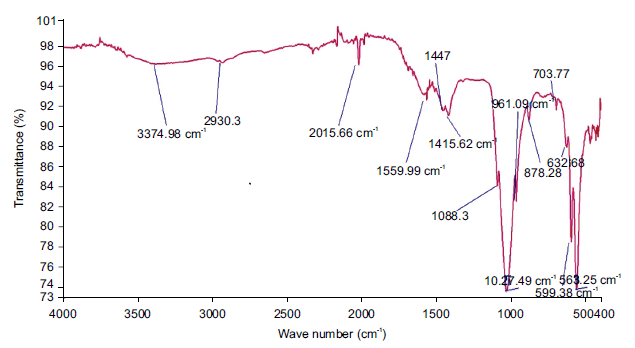
The FTIR spectra of the biochar revealed dominant peaks at 3374.78, 2930.3, 1559.9, 1415.62 and 1027.49 cm–1 on the functional region and 961.09, 878.28, 703.77 and 599.38 cm–1 on the finger print region (Fig. 1). The biochar was characterized by O-H (hydroxyl group) and C-H stretching, C = C aromatic ring, C-H aliphatic bending vibrations and C-O stretching vibrations of alcohol and phenol functional groups. These functional groups depict efficient toxicant adsorption, immediate labile carbon release to soil from the organic materials retained and long-term carbon sequestration. The presence of 961.09, 878.28 and 703.77 cm–1 peaks showcased enhanced aromaticity for improved toxicant adsorption.
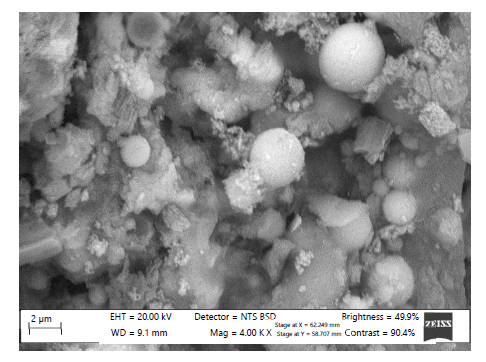
The surface morphology of the biochar tested indicated presence of evenly distributed spherical structures (Fig. 2). The spherical structures showed evidence of condensation and carbonization of volatile organic compounds during pyrolysis of the feedstock. They also indicated partial combustion (depicted by low pore distribution) or deposition of carbon-rich particles, well supported by the FTIR spectra.
| Table 2: | Nutrient characteristics of the biochar tested | |||
| Parameters | Ash (%) | pH | EC (mS/cm) | C (%) | N (%) | P (%) | K (%) | Ca (%) |
| Values | 84.7 | 10.52 | 3.05 | 14.41 | 0.84 | 0.07 | 0.28 | 0.32 |
|
|
|
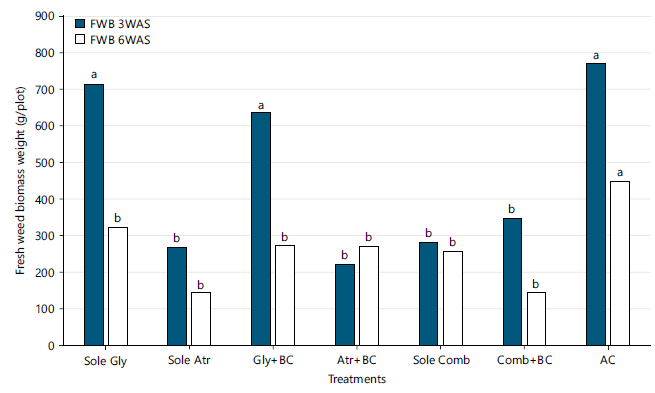
Effects of herbicides with or without biochar pretreatments on fresh biomass weight of weeds: Fresh biomass weight of weeds (FWBW) taken at 3 and 6 WAS were significantly affected by the herbicides tested with or without biochar pretreatment (Fig. 3). All the herbicides and biochar treatments significantly reduced FWBW compared to the absolute control (AC) treatments that received neither herbicide nor biochar pretreatment. Glyphosate based treatments were responsible for higher FWBW followed by combined herbicide and least values were from atrazine treated soil. Sole Gly was the poorest of the treatments to reduce FWBW at both sampling times with FWBW of 718.7 and 323.8 g during 3 and 6 WAS respectively compared to 269.3 and 142.5 g respectively from Sole Atr and 283.8 g and 257.7 g respectively from Sole Comb plot. Pretreating glyphosate treated soil with biochar reduced FWBW from 718.7 to 639.1 g and from 323.8 to 275.5 g during 3 and 6 WAS respectively. Similar reduction in FWBW from 269.3 to 220.9 g and 257.7 to 143.9 g were respectively observed from biochar pretreated atrazine (at 3 WAS) and combined herbicide soils (at 6 WAS). Generally, FWBW were lower at 6 WAS compared to 3 WAS across all the treatments tested.
|
|
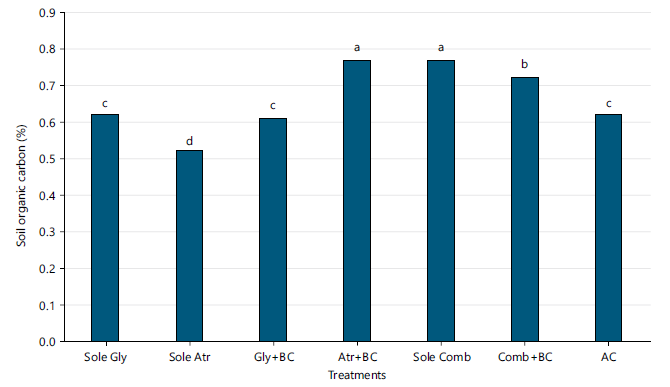
Effects of herbicides with or without biochar pretreatments on soil organic carbon contents: Soil organic carbon (SOC) was significantly influenced by the tested treatments (Fig. 4). Sole atrazine treated soil had the least organic carbon content (0.52%) equivalent to 16.1% organic carbon depletion compared to AC. Pretreating soil with biochar prior to atrazine use, however, increased SOC from 0.52 to 0.77% equivalent to 48.1% increase in organic carbon compared to Sole Atr. Similar biochar pretreatment did not significantly change the organic carbon in soil treated with glyphosate and combined herbicide when compared with their sole herbicide applications. Generally highest organic carbon contents were observed from soil treated with Atr+BC = Sole Comb>Comb+BC.
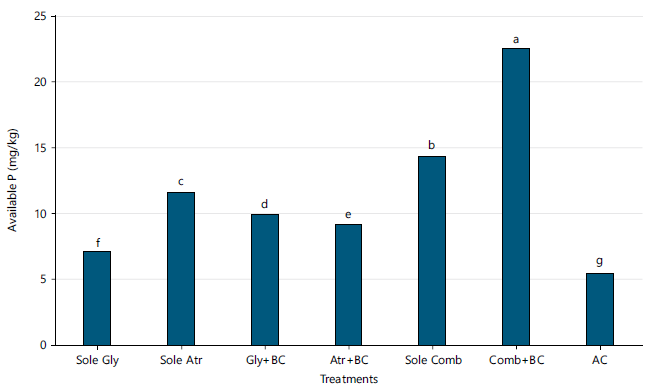
Effects of herbicides with or without biochar pretreatments on soil available phosphorus contents: Available P varied significantly across all the treatments tested (Fig. 5). All the treatments significantly increased soil available P at harvesting compared to AC. Use of combined herbicide with (22.47 mg/kg) and without (14.38 mg/kg) biochar pretreatment was responsible for the highest soil available P at maize harvesting. Biochar pretreatment increased available P in soil treated with glyphosate (by 37.7%) and combined herbicide (by 56.3%) above values from their sole herbicide applications. Biochar pretreatment however, reduced available P by 20.5% in atrazine treated soil.
Effects of herbicides with or without biochar pretreatments on soil electrical conductivity (EC) and pH: Soil electrical conductivity (EC) increased significantly (except in Sole Comb plot) by all the treatments tested compared to AC (Table 3). Plot treated with combined herbicide and biochar (Comb+BC) produced the highest (172 μS/cm) EC at maize harvesting while the least concentration (65.3 μS/cm) was from similar treatment without biochar (Sole Comb). Biochar pretreatment therefore increased soil EC by 1.6 and 163.4% in Atr+BC and Comb+BC plots respectively while it reduced it by 7.0% in Gly+BC compared to their respective sole herbicide treatments.
| Table 3: | Effects of herbicides with or without biochar pretreatments on soil pH and electrical conductivity (EC) | |||
| Treatments | Soil pH | Soil EC (μS/cm) |
| Sole Gly | 7.04ab | 76.7b |
| Sole Atr | 7.13ab | 82.0b |
| Gly+BC | 7.07ab | 71.3b |
| Atr+BC | 7.66a | 83.3b |
| Sole Comb | 7.10ab | 65.3b |
| Comb+BC | 6.96b | 172.0a |
| AC | 7.13ab | 69.3b |
| Means followed by the same letter (s) in the same column are not significantly different by DMRT at p<0.05. Gly is glyphosate at 100% application rate, Atr is atrazine at 100% application rate, BC is biochar made from Tithonia diversifolia plus bone meal, Comb is glyphosate at 50% application rate mixed with atrazine at 50% application rate | ||
| Table 4: | Effects of herbicides with or without biochar pretreatments on grain yield, fresh shoot and root biomass weights of maize | |||
| Treatments | GY | FSBW t/ha | FRBW |
| Sole Gly | 2.93a | 7.87ab | 3.50b |
| Sole Atr | 1.73b | 8.83a | 5.83ab |
| Gly+BC | 2.33ab | 8.23a | 4.89ab |
| Atr+BC | 2.3ab | 8.03ab | 4.49ab |
| Sole Comb | 2.93a | 7.83b | 4.77ab |
| Comb+BC | 2.47ab | 8.37a | 7.29a |
| AC | 0.87c | 3.90c | 1.20c |
| Means followed by the same letter (s) in the same column are not significantly different by DMRT at p<0.05. Gly is glyphosate at 100% application rate, Atr is atrazine at 100% application rate, BC is biochar made from Tithonia diversifolia plus bone meal, Comb is glyphosate at 50% application rate mixed with atrazine at 50% application rate, GY is grain yield, FSBW is fresh shoot biomass weight and FRBW is fresh root biomass weight of maize | |||
Effects of herbicides with or without biochar pretreatments on grain yield, fresh shoot and root biomass weights of maize: All the treatments tested significantly increased grain yield (GY), fresh shoot (FSBW) and root (FRBW) of maize compared to AC (Table 4). Highest grain yield (2.93 t/ha) was obtained from Sole Gly and Sole Comb plots followed by Comb+BC>Gly+BC>Atr+BC>Sole Atr>AC. It was surprising that the higher available P and lower FWBW from Sole Atr plot did not result in higher maize GY over the glyphosate-based treatments. Higher SOC from plots seem to be indicative for higher maize GY. This claim of higher SOC was also functional in atrazine treatments, for example, the higher SOC (0.77%) from Atr+BC over Sole Atr (0.52%) produced higher GY (2.30 t/ha) compared to 1.73 t/ha from Sole Atr. Atrazine again was more responsive to biochar pretreatment when it comes to promoting maize grain yield compared to other herbicides tested where maize GY reduced with biochar pretreatment. Maize GY increased by 32.9% in Atr+BC plot compared to Sole Atr. Maize GY reductions of 20.5 and 15.7% were observed in Gly+BC and Comb+BC plots respectively compared to their sole herbicide treatments. The potential of all the treatments tested to increase maize GY above AC showed the high nutrient degradation level of the soil studied.
The FSBW and FRBW of maize were significantly affected by the treatments tested (Table 4) and treatments that supported higher GY produced lower FSBW and FRBW. Maize plants from Sole Atr and Comb+BC treated soils were higher in FSBW and FRBW respectively. The FSBW of maize was in the order of Sole Atr>Comb+BC>Gly+BC>Atr+BC>Sole Gly>Sole Comb>AC while FRBW followed the order Comb+BC>Sole Atr>Gly+BC>Sole Comb>Atr+BC>Sole Gly>AC. Biochar pretreatment enhanced FSBW and FRBW of maize prior to glyphosate and combine herbicide use while it reduced FSBW of atrazine treated soils. Biochar pretreatment increased FSBW of maize by 1.05 and 1.07-folds while FRBW was enhanced by 1.40 and 1.53-folds compared to Sole Gly and Sole Comb respectively. In atrazine treated plots, biochar pretreatments reduced FSBW and FRBW by 1.10 and 1.30- folds compared to Sole Atr. The least weights were from the AC.
|
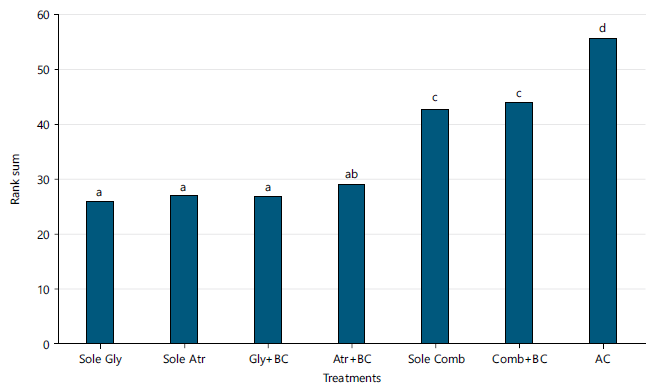
Rank sum values of the treatments tested: Ranking of all the treatments tested using all the data collected showed sole glyphosate use as the one conferring poorest effects on soil and maize parameters (Fig. 6). Sole Comb treatment was the best of the treatments tested with rank sum value of 26. Biochar pretreatment reduced the adverse impacts of the Sole Gly treatment in the soil studied by moving their rank sum values from 44 to 43 in Sole Gly and Gly+BC respectively. Use of biochar pretreatment, however, seem to slightly increased adverse impacts of the Sole Comb and Sole Atr treatments by increasing its rank sum value from 26 to 27 in Sole Comb and Comb+BC respectively and from 27 to 29 in Sole Atr and Atr+BC respectively. The highest rank sum value (56) obtained from AC further revealed the poor nutrient and organic carbon state of the soil studied. The soil has been continuously cropped for more than three decades with indiscriminate use of agrochemicals (chemical fertilizers and herbicides of different kinds)
DISCUSSION
Herbicide use for weed eradication has become very popular among farmers in the world and its use will continue to increase with the increasing human population. Herbicide, especially when used indiscriminately has multiple adverse effects on the environment and human19,20. Present work studied biochar pretreatment strategy that will not only benefit soil health but also serve as adsorbent for controlled release of herbicide to achieve effective and sustainable weed management.
Biochar is characterized by porous structure, large surface area and presence of beneficial functional groups for toxicant adsorption21. The tithonia biochar studied was dominated by combination of functional groups (C-H) that depict its ability to immediately supply nutrients and very labile carbon into the soil and the aromatic (C = C) and oxygenated functional (-COOH, -OH, C-O) that stand biochar out for efficient toxicant adsorption and long-term carbon sequestration22. The bone meal added to the Tithonia diversifolia biomass during might have contributed the C-H, C-O functional groups arising from its possible incomplete pyrolysis at the 350°C while the C = C was contributed by the Tithonia biomass which had completely carbonized at 350°C. The presence of this functional group distribution in the biochar studied enabled the biochar to effectively play multiple roles of toxicant adsorption, moderate herbicide release over time and immediate mineralization to supply labile carbon and nutrients. The spherical structures from the SEM output are known for their potential to enhance surface area of biochar for improved toxicant adsorption, provision of site for improved microbial habitation and conferring of hydrophobicity. Biochars with these spherical structures are desired for their effectivity in adsorbing pollutants, enhancing soil water holding capacity, microbial activity and soil fertility. They also indicate more stable, recalcitrant carbon fraction that guarantees long term carbon sequestration23.
These unique characteristics of the biochar tested enabled it to chemically adsorb and physically entrap some of the herbicide applied. The adsorbed and entrapped herbicides help to immediately reduce excess herbicide concentrations in the soil solution especially when applied indiscriminately. Thus, preventing prolonged direct contact of herbicides with soil and soil organisms. Herbicides held this way could be released at later time when needed to eradicate weed as the test crop aged. This was observed from this study where biochar pretreated soil reduced fresh weed biomass weights more at 6 WAS than at 3 WAS in Gly+BC and Comb+BC plots. Biochar pretreatment, therefore, conferred controlled release of applied herbicides to benefit the oil, test crop and herbicide efficacy on the weed.
Furthermore, the herbicides tested with or without biochar pretreatment served as not only weed control material but also as nutrient source to the soil for plant use. This was supported by higher available P, EC and organic carbon contents observed from all the treated plots relative to the AC. Biochar pretreatment however further benefited the soil in enhancing its available P and organic carbon pools above what they were prior to the trial. The occurrence of C-H peak in biochar has been reported to depict incomplete thermal decomposition of the feedstock24 which served as immediate nutrient and labile organic carbon sources to the soil in the present study. The improved nutrition, labile and stabilized carbon in the biochar pretreated soil eventually achieved higher maize grain yield and biomass weights especially in atrazine (for grain yield) and glyphosate and combined herbicides (or fresh biomass weights25,26.
It was surprising that the higher available P and lower FWBW from Sole Atr plot did not result in higher maize GY over the glyphosate-based treatments. Higher SOC from plots seem to be indicative for higher maize GY. This claim of higher SOC was also functional in atrazine treatments, for example, the higher SOC (0.77%) from Atr+BC over Sole Atr (0.52%) produced higher GY (2.30 t/ha) compared to 1.73 t/ha from Sole Atr. This indicated that the plants in these plots had benefited from the improved soil moisture, microbial activity, slow and continuous nutrient release and reduced direct contact with herbicides from the biochar pretreated soil26.
CONCLUSION
Biochar derived from Tithonia diversifolia as a soil pretreatment enhanced soil properties, improved herbicide (atrazine and glyphosate) efficacy and reduced potential herbicide toxicity under field conditions. Although it did not consistently increase maize biomass compared to sole herbicide treatments, it improved grain yield particularly in atrazine-treated plots and influenced biomass differently under glyphosate and combined applications. Overall treatment performance followed the order: Sole Gly The findings suggest that feedstock selection and controlled pyrolysis conditions (<400°C), particularly blending low-cellulosic materials with nutrient-rich sources, are critical for producing biochar with optimized functional properties for both soil improvement and weed management. Further long-term and multi-location studies are recommended to confirm scalability and field stability.
The research was partially funded by Tertiary Trust Fund, Nigeria, been a postdoctoral grant received by the first author (Yetunde Bunmi Oyeyiola).
The authors appreciate the Tertiary Education Trust Fund (TETFUND) Nigeria and laboratory staff at the Department of Clothing and Textile, Cape Peninsula University of Technology, South Africa, for providing funding and technical support in the characterization of the biochar studied.FUNDING
ACKNOWLEDGMENT
REFERENCES
How to Cite this paper?
APA-7 Style
Oyeyiola,
Y.B., Egbinade,
A.E., Bojuro,
F.A., Ajayi,
F.D., Nyamukamba,
P., Tanga,
M. (2026). Enhancing Maize Production through Biochar Pretreatment: Sustainable Herbicide Use and Soil Management. Trends in Environmental Sciences, 2(2), 122-133. http://doi.org/10.21124/tes.2026.122.133
ACS Style
Oyeyiola,
Y.B.; Egbinade,
A.E.; Bojuro,
F.A.; Ajayi,
F.D.; Nyamukamba,
P.; Tanga,
M. Enhancing Maize Production through Biochar Pretreatment: Sustainable Herbicide Use and Soil Management. Trends Env. Sci 2026, 2, 122-133. http://doi.org/10.21124/tes.2026.122.133
AMA Style
Oyeyiola
YB, Egbinade
AE, Bojuro
FA, Ajayi
FD, Nyamukamba
P, Tanga
M. Enhancing Maize Production through Biochar Pretreatment: Sustainable Herbicide Use and Soil Management. Trends in Environmental Sciences. 2026; 2(2): 122-133. http://doi.org/10.21124/tes.2026.122.133
Chicago/Turabian Style
Oyeyiola, Yetunde, Bunmi, Abiodun Ebenezer Egbinade, Favour Abiodun Bojuro, Favour Damilola Ajayi, Pardon Nyamukamba, and Mbappe Tanga.
2026. "Enhancing Maize Production through Biochar Pretreatment: Sustainable Herbicide Use and Soil Management" Trends in Environmental Sciences 2, no. 2: 122-133. http://doi.org/10.21124/tes.2026.122.133

This work is licensed under a Creative Commons Attribution 4.0 International License.